
Modern living room decor isn’t about chasing trends or filling a space with furniture, it’s about intentional design that balances function, openness, and visual calm. The modern aesthetic favors clean geometry, neutral foundations, and carefully chosen accents that make a statement without clutter. For homeowners looking to refresh their living space, understanding the core principles of modern design makes the difference between a room that feels polished and one that just looks empty. This guide breaks down practical, actionable ideas to create a modern living room that works for real life, not just a magazine spread.
Key Takeaways
- Modern living room decor prioritizes clean lines, minimal ornamentation, and intentional design that balances function with visual calm rather than chasing trends.
- Select low-profile furniture with geometric shapes and neutral fabrics, keeping the furniture count minimal so each piece has purpose and breathing room.
- Layer neutral tones—whites, grays, taupes, and natural wood—with subtle textures like matte and glossy finishes to create depth without relying on color.
- Incorporate statement lighting as sculptural focal points using geometric or organic shapes in matte black metal or brushed brass, layered across ambient, task, and accent sources.
- Mix natural materials like wood, stone, linen, leather, and metal throughout the space, and add personality with bold, large-scale artwork and few, purposeful accessories.
- Transform your space incrementally by swapping bulky pieces for sleeker designs, painting walls a cohesive neutral, and adding statement lighting to shift the entire feel toward a modern aesthetic.
What Defines Modern Living Room Decor?
Modern decor emerged from the mid-20th century modernist movement, emphasizing form following function. Unlike traditional styles that lean on ornament and symmetry, modern design strips away excess.
Key characteristics include clean lines, minimal ornamentation, and open floor plans that prioritize flow and light. Furniture sits low to the ground with geometric shapes, think square-arm sofas, not rolled-arm chesterfields. Materials tend toward natural wood, metal, glass, and stone rather than heavy fabrics or carved details.
Negative space matters as much as what fills the room. Modern interiors avoid overcrowding: each piece should have purpose and breathing room. Color palettes skew neutral, whites, grays, blacks, beiges, with intentional pops of color through art or a single accent piece.
It’s also worth noting what modern isn’t. It’s not minimalism taken to an extreme (that’s more Scandinavian or Japanese design), and it’s not industrial loft style with exposed brick and ductwork. Modern design feels curated but livable, edited but warm.
Embrace Minimalist Furniture with Clean Lines
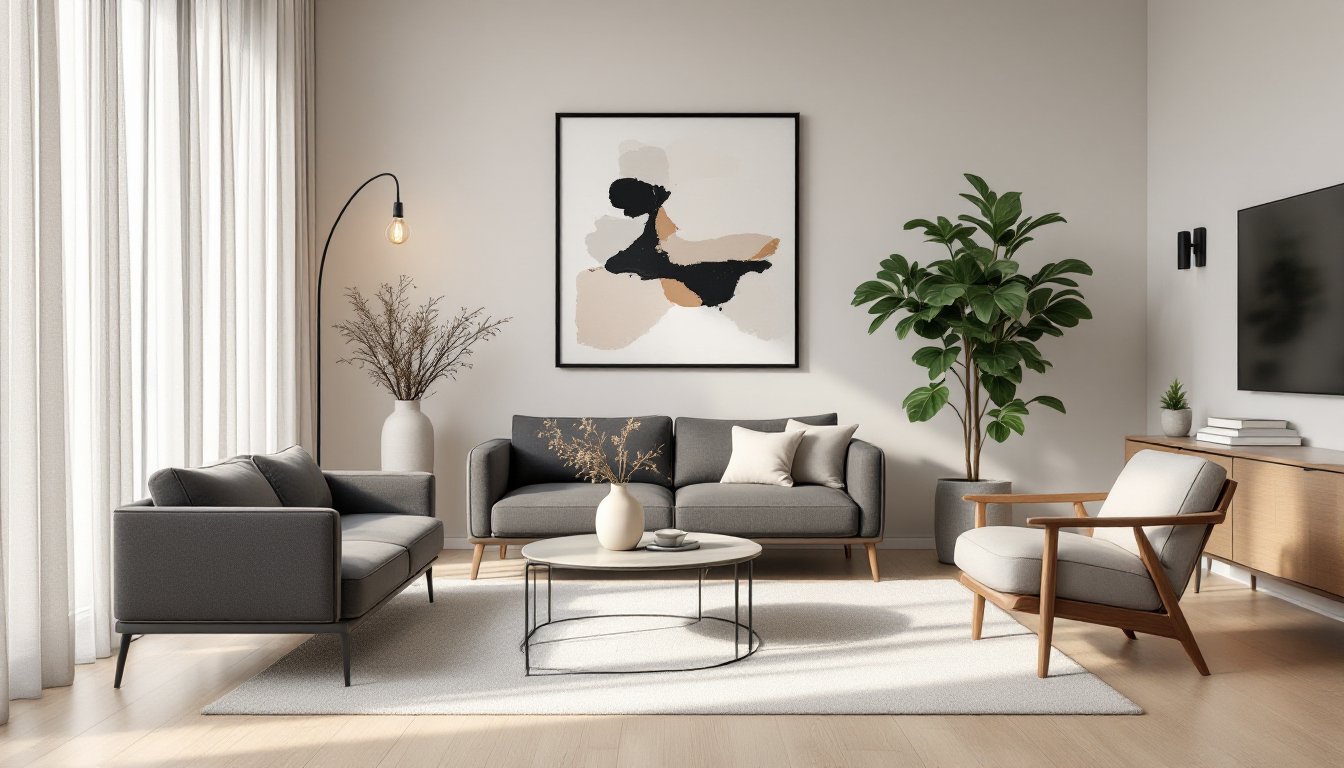
Furniture selection makes or breaks a modern living room. Start with a low-profile sofa in a solid neutral fabric, linen, cotton-blend, or performance fabric if pets or kids are in the picture. Look for straight or slightly tapered legs, square or track arms, and firm cushions that hold their shape.
Avoid bulky sectionals unless the room is large enough to support one without dominating the space. A three-seat sofa paired with a streamlined accent chair often creates better visual balance than an L-shaped sectional.
Coffee tables should be simple: a wood slab on metal legs, a glass top with a geometric base, or a single-material piece like a concrete cube. Skip anything with drawers, shelves, or fussy details. Height matters, 16 to 18 inches is standard for most sofas.
For media consoles or credenzas, opt for designs with flush or handleless drawers and a floating mount if possible. Wall-mounting the console reduces visual weight and makes the room feel larger. If wall-mounting isn’t an option, choose slim legs rather than a solid base.
Keep the furniture count low. A modern living room doesn’t need matching end tables, a console table behind the sofa, and a bookshelf. Pick two or three anchor pieces and let the rest of the room breathe.
Create Depth with Layered Neutral Color Palettes
Neutrals don’t mean boring, they mean intentional. A successful modern palette layers shades of white, gray, taupe, black, and natural wood tones to create depth without relying on color.
Start with walls in a warm white or light greige (gray-beige hybrid). Cool whites can feel sterile: warmer tones add subtle dimension. If the room gets strong natural light, cooler tones work. North-facing rooms benefit from warmer bases.
Introduce contrast through furniture and flooring. A charcoal sofa against pale walls grounds the room. Medium-toned wood floors (oak, walnut) add warmth without competing for attention. If the floor is dark, lighten the furniture: if the floor is light, go darker with seating.
Accent colors should be restrained. A single rust-colored throw pillow, a navy art piece, or a muted olive plant pot can anchor the palette without disrupting the calm. Stick to one or two accent tones max.
Texture plays a key role here. A white linen sofa, white plaster wall, and white ceramic vase all read as “white,” but the interplay of matte, woven, and glossy surfaces keeps the eye engaged.
Paint sheens matter too. Use matte or eggshell on walls for a soft, modern look. Reserve satin or semi-gloss for trim if you want subtle definition, but many modern interiors paint trim the same color as walls to eliminate visual breaks.
Incorporate Statement Lighting as Functional Art
Lighting in a modern living room isn’t just functional, it’s sculptural. A well-chosen fixture becomes a focal point and defines the room’s character.
Pendant lights or chandeliers with geometric or organic shapes work well over seating areas or centered in the room. Look for designs in matte black metal, brushed brass, or natural materials like rattan or blown glass. Avoid ornate crystal or overly decorative styles.
Height matters. If hanging over a coffee table, the bottom of the fixture should be 30 to 36 inches above the table surface. Over open floor space, aim for at least 7 feet of clearance to avoid head strikes.
Floor lamps with arc or tripod bases add height and fill corners without requiring ceiling wiring. Choose lamps with exposed bulbs or simple drum shades. Dimmable LED bulbs (2700K to 3000K color temperature) provide warm, adjustable light that suits both daytime and evening use.
Wall sconces flanking a media console or sofa can replace table lamps, freeing up surface space. Hardwired sconces require an electrician and wall patching, but plug-in versions with fabric-covered cords offer a simpler install.
Layer light sources: ambient (overhead or recessed), task (reading lamp), and accent (art lights or backlighting). A single overhead fixture leaves a modern room feeling flat. Multiple sources at different heights create the depth the style needs.
Mix Textures and Materials for Visual Interest
Modern design relies on material contrast to keep neutral palettes from falling flat. Mixing textures adds tactile richness without color or pattern.
Combine matte and glossy finishes: a velvet sofa against a glass coffee table, a rough-hewn wood console next to a polished concrete floor. Natural materials, wood, stone, linen, leather, metal, should appear in multiple forms throughout the room.
Rugs anchor the space and introduce softness underfoot. A low-pile wool rug in ivory, gray, or charcoal works in most modern settings. Size it so the front legs of the sofa and chairs rest on the rug: an 8×10 or 9×12 suits most living rooms. Avoid high-pile shag or ornate patterns, they skew boho or traditional.
Throw pillows and blankets add layering opportunities. Stick to solid colors or subtle textures like chunky knit, linen, or boucle. Two to four pillows per sofa is enough: more risks looking cluttered.
Window treatments should be simple. Floor-to-ceiling linen or cotton drapes in white or gray soften hard edges and frame views without fuss. Mount the rod close to the ceiling and let panels puddle slightly on the floor for a tailored look. Blackout lining can be added if light control is needed, but sheer or semi-sheer fabrics suit the modern aesthetic better.
Plants bring life and organic texture. A single fiddle-leaf fig, rubber plant, or snake plant in a simple ceramic or concrete planter works better than a collection of small pots. Scale matters, go larger rather than smaller.
Add Personality with Curated Accessories and Art
Modern doesn’t mean impersonal. Accessories and art provide the opportunity to inject individuality without compromising the clean aesthetic.
Artwork should be bold and intentional. A single large-scale piece (40×60 inches or bigger) above the sofa makes more impact than a gallery wall of small frames. Abstract art, black-and-white photography, or line drawings align well with modern style. Frame in simple wood or metal, no ornate molding.
If a gallery wall fits the space, keep frames uniform and use a grid layout rather than a salon-style cluster. Spacing should be consistent, typically 2 to 3 inches between frames.
Accessories should be few and purposeful. A sculptural vase, a stack of art books, a single ceramic bowl, these add personality without clutter. Group items in odd numbers (three, five) and vary heights for visual interest.
Avoid tchotchkes, seasonal decor, or anything overly sentimental that disrupts the aesthetic. Modern design favors restraint.
Open shelving or a bookcase offers display space but requires curation. Mix books (some stacked, some upright), a few objects, and negative space. Don’t fill every shelf.
Personal items, family photos, travel finds, can appear in modern rooms if presented thoughtfully. Use matching frames in black, white, or natural wood and limit the number displayed at once. Rotate items seasonally to keep the space feeling fresh without permanent clutter.
Conclusion
Creating a modern living room is about making deliberate choices, furniture with purpose, a restrained palette, and accessories that earn their place. The style rewards editing and intention over abundance. Homeowners don’t need to gut the space or buy all new furniture: swapping a bulky coffee table for a sleeker design, painting walls a cohesive neutral, or adding a statement light fixture can shift the entire feel. Modern design works because it’s flexible, functional, and timeless, qualities that matter long after the refresh is done.