
Building or upgrading a wine cellar involves more than just racking and cooling systems, the door is the gatekeeper of the entire environment. A poorly sealed or improperly insulated wine cellar door can sabotage temperature stability, spike humidity levels, and turn a carefully curated collection into expensive vinegar. Whether planning a walk-in cellar under the stairs or converting a basement room, the door choice directly impacts how well the space maintains the ideal 55–60°F and 60–70% humidity that wine demands. This guide walks through the technical requirements, material options, and must-have features for selecting a wine cellar door that performs as well as it looks.
Key Takeaways
- Wine cellar doors are critical climate control equipment that directly impacts temperature stability and humidity levels, with poor sealing causing cooling systems to work harder and increasing energy costs.
- Solid wood wine cellar doors require heavy-duty hinges, magnetic weatherstripping, and exterior-grade construction with foam or solid-core insulation for optimal thermal performance.
- Glass wine cellar doors must feature insulated dual-pane or triple-pane glass with low-E coatings and thermal breaks to achieve R-values between 3 and 7 and prevent condensation.
- Self-closing hinges, quality locking mechanisms, and raised saddle thresholds with tight door sweeps are essential features that prevent air infiltration and maintain consistent wine storage conditions.
- Professional installation of wine cellar doors ensures proper frame alignment, even weatherstripping compression, and integration with the cellar’s insulation and vapor barrier system.
- A well-installed wine cellar door protects wine investments by maintaining the ideal 55–60°F and 60–70% humidity levels that prevent cork degradation, oxidation, and label damage.
Why Wine Cellar Doors Matter for Temperature and Humidity Control
Wine storage isn’t forgiving. A few degrees of temperature swing or prolonged exposure to dry air will degrade corks, oxidize wine, and ruin labels. The door is the primary boundary between the controlled cellar environment and the rest of the house, making it a critical component, not a decorative afterthought.
Air infiltration is the enemy. Standard interior doors lack the sealing and insulation necessary to prevent warm, humid air from the home from leaking into a chilled cellar. Even a 1/8-inch gap around the perimeter can compromise a cooling unit’s efficiency, forcing it to cycle more frequently and driving up energy costs. Over time, temperature fluctuations stress wine and accelerate aging in unpredictable ways.
Insulation value matters as much as the seal. A solid-core door with an R-value of at least 5 is the baseline for most residential wine cellars. Higher R-values, achieved through foam-core construction or multi-layer glass, reduce thermal transfer and help the cooling system maintain consistent conditions. Codes don’t typically mandate specific R-values for wine cellar doors, but treating the door like an exterior entry (thermally speaking) is the right approach.
Moisture barriers also play a role. If the cellar is significantly cooler than adjacent spaces, condensation can form on the warm side of the door or within the door itself if it’s not properly constructed. Vapor barriers and moisture-resistant materials prevent rot, warping, and mold growth. Exterior-grade doors or purpose-built wine cellar doors are designed with these concerns in mind.
Finally, the threshold and sweep deserve attention. A raised threshold with a tight door sweep or automatic drop seal prevents air from creeping under the door. It’s a small detail that makes a measurable difference in maintaining stable conditions, especially in cellars with concrete slab floors where cold air naturally sinks and escapes.
Types of Wine Cellar Doors to Consider
Choosing the right wine cellar door involves balancing aesthetics, performance, and the layout of the space. Two primary categories dominate the market: solid wood and glass. Each has distinct advantages depending on the cellar’s design and the homeowner’s priorities.
Solid Wood Doors for Traditional Elegance
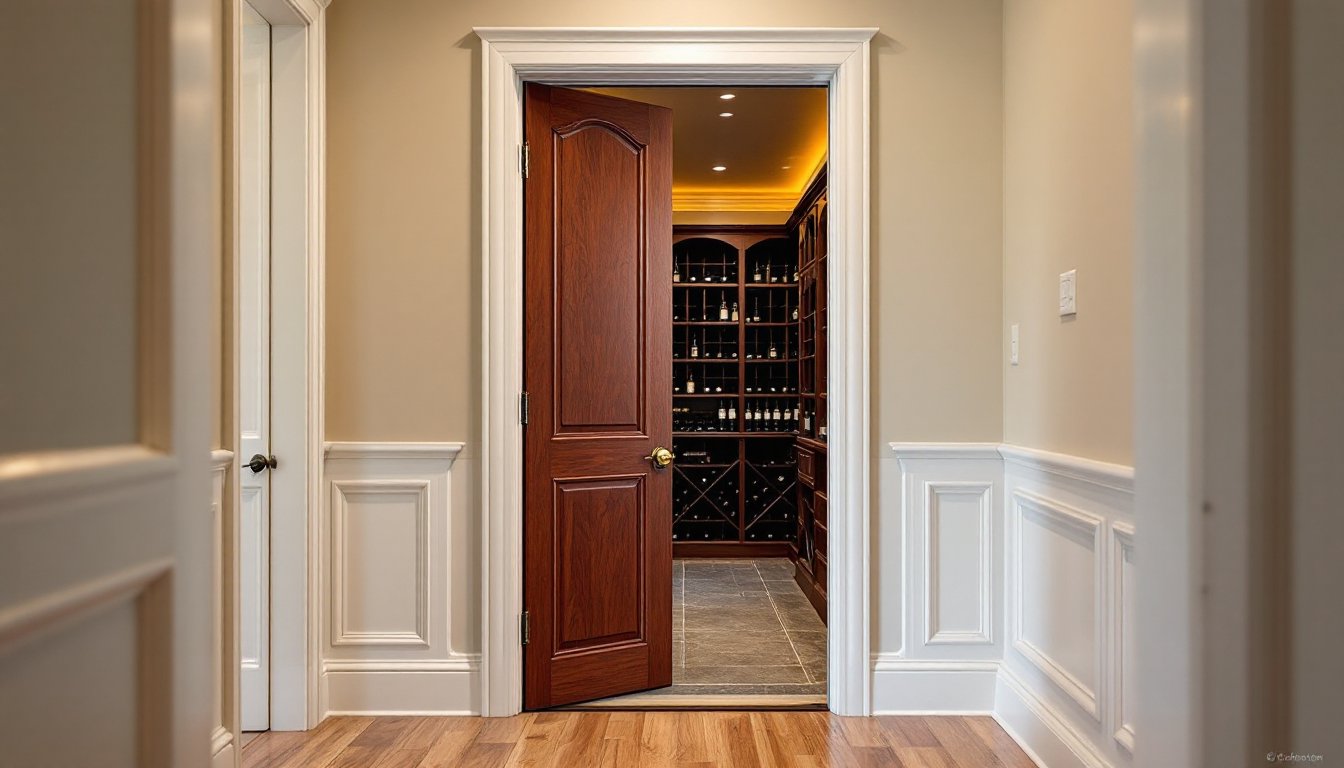
Solid wood wine cellar doors bring warmth and classic appeal, especially in traditional or rustic home designs. They’re typically constructed from mahogany, alder, knotty alder, or oak, chosen for their stability and resistance to warping in fluctuating humidity.
Most solid wood cellar doors are built with a 1.75-inch thickness (compared to standard interior doors at 1.375 inches) and feature foam or solid-core insulation. The thicker profile accommodates better weatherstripping and provides superior thermal performance. Look for doors with exterior-grade construction, meaning mortise-and-tenon joinery, waterproof glue, and a factory-applied finish that seals the wood against moisture.
Weatherstripping is non-negotiable. Magnetic gaskets (similar to those on refrigerator doors) or compression-style weatherstripping around the jamb creates an airtight seal when the door closes. Magnetic seals are especially effective for wine cellar door applications because they apply even pressure around the perimeter and compensate for minor irregularities in the frame.
One practical consideration: solid wood doors are heavy, often 80–100 pounds or more. That means upgrading to heavy-duty hinges, three or four ball-bearing hinges rated for the door’s weight, and ensuring the rough opening is framed with king studs and a proper header to support the load. If the cellar entrance is in a load-bearing wall, consult local building codes and consider whether a structural engineer’s input is needed.
Wine cellar door ideas with solid wood often include arched tops, decorative iron grilles, or speakeasy-style windows. These features add character but should never compromise the seal. Any glass inserts should be dual-pane with an insulated spacer.
Glass Doors for Showcasing Your Collection
Glass wine cellar doors turn the collection into a display piece, making them popular in modern homes, dining areas, and open-concept layouts. They allow homeowners to view the cellar without opening the door and disrupting the environment.
Performance hinges on the glass specification. Single-pane glass is inadequate, thermal bridging and condensation make it a poor choice. Instead, use insulated dual-pane or triple-pane glass with low-E coatings and an argon or krypton gas fill. These assemblies can achieve R-values between 3 and 7, depending on thickness and coatings, putting them in range of many solid doors.
Tempered or laminated safety glass is required by most building codes for any door glazing. Tempered glass shatters into small, blunt pieces if broken: laminated glass holds together thanks to an interlayer film. Either option reduces injury risk and meets IRC glazing requirements for doors.
Framing options include full-glass doors with minimal aluminum or steel frames, or wood-framed doors with large glass panels. Aluminum frames with thermal breaks (insulating barriers between interior and exterior metal) prevent the frame from becoming a cold-conducting path. Wood frames offer better insulation but require careful sealing to avoid moisture issues.
Condensation control is the biggest challenge with glass cellar doors. If the cellar is kept at 55°F and the home at 72°F, moisture in the warm air will condense on the cold glass surface unless the glass has sufficient insulating value. Installing a glass door without adequate R-value or proper HVAC balance in the home can lead to constant dripping and potential water damage to flooring.
Lighting inside the cellar enhances the showcase effect. LED strip lighting or low-heat accent lights prevent UV exposure (which degrades wine) while highlighting bottles and labels. Just remember: any lighting adds a small heat load that the cooling system must offset.
Essential Features for Wine Cellar Door Performance
Beyond material choice, several features separate a standard door from one that will reliably protect a wine collection for years.
Self-closing hinges or an automatic door closer prevent the door from being left ajar. Gravity or spring tension pulls the door shut every time, eliminating the most common cause of cellar climate failure. Adjustable closers allow fine-tuning of closing speed and latch force.
A quality locking mechanism isn’t just about security, it’s about maintaining consistent latch pressure against the weatherstripping. A deadbolt or mortise lock ensures the door stays firmly seated. Some wine cellar doors include integrated latches with compression features that pull the door tight into the gasket.
Threshold design affects both sealing and accessibility. A raised saddle threshold (often 1–2 inches high) allows for a solid sweep seal and minimizes air infiltration at the bottom. But, this creates a trip hazard and may not be ADA-compliant if accessibility is a concern. In-floor thresholds with automatic drop seals offer an alternative, though they cost more and require precise installation.
Factory pre-hung units save headaches. Installing a wine cellar door as a pre-hung assembly, door, jamb, hinges, weatherstripping, and hardware all integrated, ensures proper alignment and sealing. Field-installing a slab door into an existing jamb rarely achieves the same airtight performance unless the installer has experience with exterior or specialty doors.
Vapor barriers in the wall assembly around the door are just as important as the door itself. The rough opening should be insulated and sealed to the same standard as the rest of the cellar envelope. Spray foam or batt insulation around the jamb, combined with a continuous vapor barrier, prevents thermal bridging and moisture infiltration.
Safety gear during installation includes safety glasses (especially when cutting or drilling metal thresholds), work gloves for handling heavy doors, and hearing protection if using power saws for trimming jambs or casings.
Finally, professional installation may be worth the cost. Wine cellar doors are heavier and require tighter tolerances than standard interior doors. An experienced carpenter or door installer will ensure the frame is plumb, the hinges are properly mortised, and the weatherstripping compresses evenly. If the door is part of a larger cellar build-out that includes HVAC, insulation, and vapor barriers, coordinating trades ensures the whole system works together.
Conclusion
A wine cellar door is more than an entrance, it’s a critical piece of climate control equipment. Solid wood or insulated glass, self-closing hinges, magnetic gaskets, and proper framing all contribute to a stable environment that protects the investment in every bottle. Skimping on the door or installation may save a few hundred dollars upfront, but the cost in spoiled wine and inefficient cooling will quickly exceed the savings. Choose a door built for the job, install it right, and the cellar will perform as intended for decades.