
Wine collectors know that temperature and humidity can make or break a vintage. While freestanding wine fridges work for casual enthusiasts, serious collectors need climate control that handles larger volumes without turning a basement into a walk-in refrigerator. That’s where ducted wine cellar cooling systems come in, they’re the professional-grade solution that keeps bottles at steady temps while tucking the noisy components out of sight. Unlike through-the-wall units that hog cellar space and broadcast compressor noise, ducted systems route conditioned air through ductwork, delivering precise climate control without the industrial look. This guide walks through how these systems work, what to consider before buying one, and what installation really entails.
Key Takeaways
- Ducted wine cellar cooling systems separate the evaporator and condenser units, routing chilled air through ductwork to maintain precise temperatures of 55–58°F while keeping compressor noise completely out of the cellar.
- Professional-grade ducted cooling offers superior design flexibility compared to through-the-wall units, allowing more creative racking layouts and finishes while supporting cellars ranging from 500 to 2,500+ bottles.
- Proper sizing requires calculating your cellar’s cooling load in BTUs based on volume, insulation, glass exposure, and ambient conditions—oversizing causes temperature swings, so skip the guesswork and use manufacturer load calculations.
- Installation demands HVAC expertise for refrigerant work and permits, but homeowners can handle ductwork and finish work; improper setup voids warranties and risks wine damage.
- Operating costs for ducted systems average $22–$44 monthly for a 2,000 BTU/hr unit, with variable-speed compressors reducing energy consumption by 20–30% compared to single-speed models.
- Ducted wine cellar cooling systems last 10–15 years with proper maintenance, including monthly filter checks, quarterly drain inspections, and annual professional HVAC servicing to prevent costly compressor failures.
What Is Ducted Wine Cellar Cooling?
A ducted wine cellar cooling unit is a split-system climate control device designed specifically for wine storage environments. Unlike self-contained units that mount directly in a cellar wall, ducted systems separate the evaporator (cold side) from the condenser (hot side) and connect them via refrigerant lines and ductwork.
The evaporator mounts remotely, often in an adjacent mechanical room, attic space, or utility closet, and distributes chilled air into the cellar through insulated ducts. Return air gets pulled back through a separate duct, creating a closed-loop cooling cycle. The condenser exhausts heat outdoors or into a well-ventilated space, keeping noise and heat away from the wine storage area.
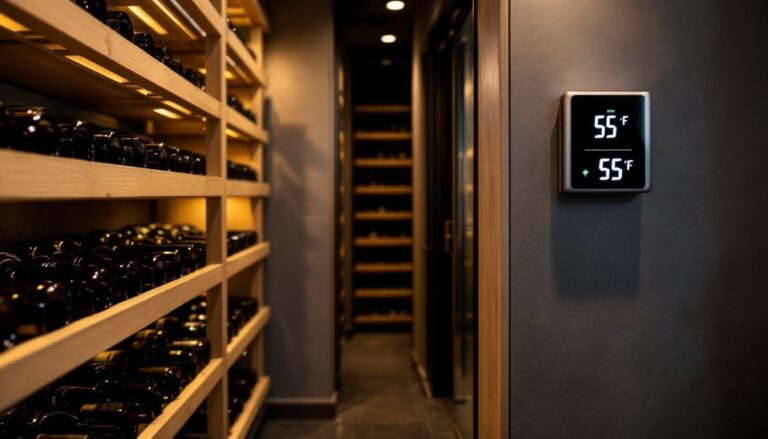
This setup is common in custom-built wine cellars ranging from 500 to 2,500+ bottles. It’s the preferred choice when aesthetics matter, when wall penetrations aren’t feasible, or when the cellar is located away from an exterior wall. Ducted systems maintain the same target ranges as other wine cooling methods: 55–58°F for long-term aging and 50–70% relative humidity to keep corks from drying out.
How Ducted Wine Cooling Systems Work
Ducted wine cellar cooling relies on a vapor-compression refrigeration cycle, the same principle behind household air conditioners and refrigerators. Here’s the step-by-step process:
- Evaporator absorbs heat: The evaporator coil, located outside the cellar, draws warm air from the wine room through a return duct. Refrigerant inside the coil evaporates, absorbing heat and cooling the air.
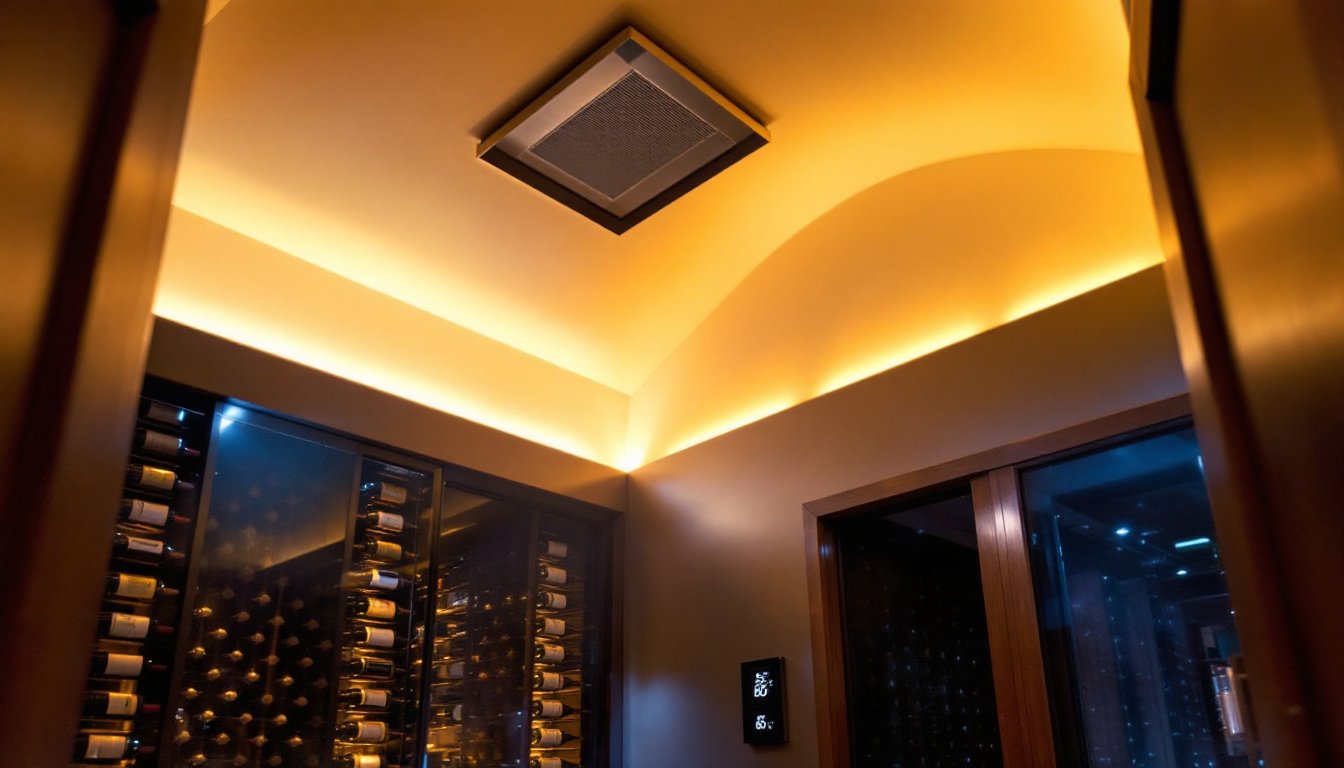
- Chilled air delivery: A blower pushes the cooled air back into the cellar via insulated supply ducts, often through ceiling or floor vents to avoid visible wall grilles.
- Refrigerant compression: The now-gaseous refrigerant travels through copper lines to the condenser unit, where a compressor pressurizes it, raising its temperature.
- Heat rejection: The hot refrigerant releases heat through the condenser coil, either outdoors or into a vented space. A fan dissipates the heat, and the refrigerant condenses back into liquid.
- Cycle repeats: The cooled liquid refrigerant returns to the evaporator, and the process starts over.
Most ducted units include a digital thermostat and humidistat to maintain setpoints automatically. Higher-end models offer Wi-Fi monitoring, dual-zone control for cellars with multiple rooms, and variable-speed compressors that reduce temperature swings and energy use.
Key Benefits of Ducted Wine Cellar Cooling Systems
Ducted systems bring several advantages over through-the-wall and mini-split alternatives:
Quiet operation: Because the evaporator and condenser sit outside the cellar, compressor noise and fan hum stay out of earshot. This matters if the cellar doubles as a tasting room or sits near living spaces.
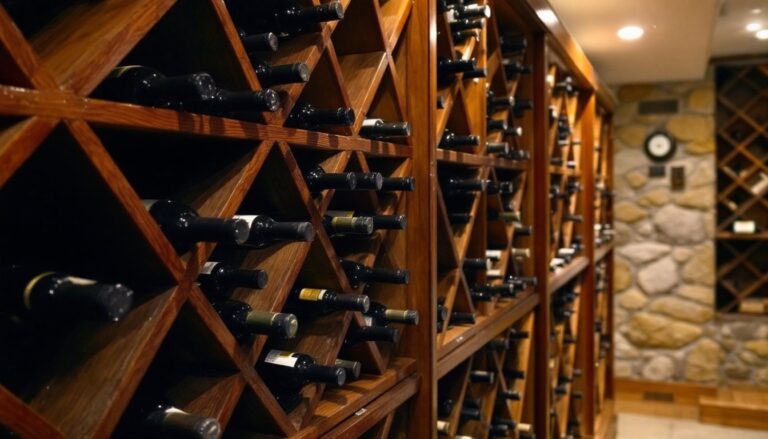
Design flexibility: Without a bulky unit protruding into the cellar, builders and designers have more freedom with racking layouts, lighting, and finishes. Ductwork hides in walls, ceilings, or floor cavities.
Remote placement: Ducted systems work when the cellar is landlocked, no exterior wall required. The condenser can go on a roof, in a garage, or in a basement mechanical room, connected by refrigerant lines that run up to 50 feet (varies by manufacturer).
Scalability: Larger cellars benefit from ducted systems’ higher BTU capacities. Units range from 1,000 to 8,000+ BTU/hr, suitable for spaces from a small closet conversion to a walk-in vault. Multi-zone models can serve separate aging and storage areas with different temperature targets.
Humidity control: Many ducted units integrate active humidification, adding moisture as needed instead of relying on passive methods. This prevents cork shrinkage and oxidation, especially in dry climates or heated basements.
Choosing the Right Ducted Cooling System for Your Wine Cellar
Selecting a ducted wine cellar cooling unit starts with calculating the cooling load, measured in BTUs per hour. This depends on cellar volume, insulation quality, glass exposure, ambient temperature, and lighting heat.
A rough formula: (Cellar cubic feet × 5) + glass adjustment + ambient load. A 1,000-cubic-foot cellar with standard insulation and minimal glass might need 5,000–6,000 BTU/hr. Poorly insulated spaces, large glass doors, or cellars in hot climates require more capacity. Don’t guess, many manufacturers offer free load calculations if given room dimensions and construction details.
Key specifications to compare:
- BTU capacity: Match to calculated load: oversizing causes short-cycling and temperature swings.
- Voltage: Most residential units run on 115V or 230V. Check existing electrical service.
- Refrigerant line length: Confirms max distance between evaporator and condenser. Longer runs may require larger line sets or additional refrigerant.
- Duct size: Typically 6-inch or 8-inch diameter flexible or rigid duct. Larger ducts reduce air velocity and noise.
- Humidity features: Look for built-in humidifiers or compatibility with add-on units if the cellar RH tends to drop below 50%.
- Control options: Digital thermostats with ±1°F accuracy, remote sensors, smartphone apps, and alarm outputs for power or temperature failures.
Popular brands include CellarPro, WhisperKOOL, Wine Guardian, and Breezaire. CellarPro’s ducted models, for example, offer variable-speed compressors and low-noise fans, making them a go-to for residential installations where quiet matters.
Installation Considerations and Requirements
Installing a ducted wine cellar cooling system isn’t a weekend DIY project. Most jurisdictions require permits for electrical and HVAC work, and improper installation voids warranties and risks damaging the wine.
Pre-Installation Checklist
- Insulation: Cellar walls, ceiling, and door should meet R-12 to R-19 minimums. Use closed-cell spray foam or rigid foam board. Seal all penetrations with caulk or expanding foam.
- Vapor barrier: Install 6-mil polyethylene sheeting on the warm side of insulation to prevent condensation and mold.
- Door: A solid-core or insulated exterior door with weatherstripping. Glass doors need double- or triple-pane insulated glass.
- Electrical: Dedicated circuit sized to unit specs, typically 15A or 20A breaker. GFCI protection if required by local code.
- Drainage: Condensate drains via gravity or condensate pump. Plan routing to a floor drain, sump, or exterior.
Mounting and Ductwork
The evaporator mounts on a platform or wall bracket in the mechanical space, as level as possible to ensure proper condensate flow. Insulated flex duct (R-6 or R-8) connects supply and return vents. Avoid sharp bends and runs longer than 25 feet to maintain airflow.
Supply vents should direct air toward the floor or along walls to promote even circulation. Return vents go high, pulling warm air out of the cellar. Use adjustable grilles to balance airflow and minimize drafts on bottles.
Refrigerant lines run through walls or ceilings, insulated and secured per manufacturer specs. This step usually requires an HVAC technician with EPA Section 608 certification to braze connections, pull a vacuum, and charge the system. DIYers can handle ductwork and finish carpentry, but leave refrigerant work to the pros.
Noise and Vibration Control
Even ducted systems generate some noise. Mount the evaporator on vibration isolation pads and use flexible duct connectors to decouple it from rigid ductwork. If the condenser sits near living spaces, consider an acoustic enclosure or strategic placement behind landscaping.
Safety note: Wear gloves and safety glasses when cutting ductwork or insulation. Use a dust mask when working with fiberglass insulation.
Maintenance and Operating Costs
Ducted wine cellar cooling units need regular upkeep to maintain efficiency and longevity.
Routine Maintenance
- Monthly: Check and clean/replace air filters. Clogged filters reduce airflow and force the compressor to work harder.
- Quarterly: Inspect condensate drain for clogs. Pour a cup of water with a few drops of bleach down the line to prevent algae buildup.
- Annually: Have an HVAC tech inspect refrigerant levels, clean condenser coils, check electrical connections, and verify thermostat calibration. Dirty coils can cut efficiency by 20% or more.
Energy Costs
A 2,000 BTU/hr unit running continuously draws roughly 200–400 watts, depending on compressor type and ambient conditions. At $0.15/kWh, that’s about $22–$44/month. Larger systems and hotter climates push costs higher. Variable-speed models use 20–30% less energy than single-speed compressors by avoiding on/off cycling.
Lifespan and Repairs
With proper maintenance, ducted systems last 10–15 years. Compressors and fans are the most common failure points. Replacement compressors run $400–$800 plus labor. Out-of-warranty service calls typically cost $150–$300 for diagnostics and minor repairs.
Budget for a service contract if the cellar holds high-value inventory. Many HVAC companies offer annual plans covering inspections, priority service, and discounted repairs.
Conclusion
Ducted wine cellar cooling systems deliver professional-grade climate control without the noise and visual clutter of wall-mounted units. They’re the right call for serious collectors who want design flexibility, remote equipment placement, and scalable capacity. Installation requires planning, proper insulation, and usually a licensed HVAC tech, but the payoff is a cellar that protects wine for decades. Regular filter changes and annual servicing keep operating costs reasonable and prevent costly breakdowns. For anyone building or upgrading a wine cellar in 2026, ducted cooling is worth the upfront investment.