
Choosing the right couch can make or break a living room. It’s the anchor piece, the spot where people gather, unwind, and spend the bulk of their time. But with thousands of styles, fabrics, and configurations on the market, narrowing down the options can feel overwhelming. This guide walks through practical couch ideas tailored to different aesthetics, room layouts, and budgets, helping homeowners make decisions that balance comfort, durability, and visual impact without second-guessing every choice.
Key Takeaways
- Choosing a living room couch with quality frame construction (kiln-dried hardwood, high-density foam at 1.8+ lbs per cubic foot) ensures durability and prevents sagging over time.
- Couch style should match your room’s aesthetic and dimensions—modern designs with track arms save space in small rooms, while traditional styles work best in larger rooms with higher ceilings.
- High-performance fabrics rated at 30,000+ double rubs resist stains and fading, making them ideal for high-traffic households; full-grain leather and 100% polyester velvet are excellent durable choices.
- Measure doorways (typically 32–36 inches wide) and room dimensions before purchasing to ensure your couch fits; apartment-sized sofas (72–78 inches) suit small rooms, while sectionals maximize seating in larger spaces.
- Style your couch with an odd number of throw pillows (3, 5, or 7) in mixed textures and sizes, drape a casual throw, and ensure the rug extends under all furniture legs to create a cohesive, finished look.
- Floating the couch slightly off the wall in medium-to-large rooms creates visual depth and defines conversation zones without overwhelming the space.
Choosing the Right Couch Style for Your Living Room
The style of a couch sets the tone for the entire room. It’s not just about looks, frame construction, cushion fill, and proportions all affect how the piece performs over time. A poorly chosen style can overwhelm a small space or get lost in a large one.
Modern and Contemporary Couch Designs
Modern couches emphasize clean lines, low profiles, and minimal ornamentation. Think straight arms, exposed wood or metal legs, and neutral or monochromatic upholstery. These pieces work well in open-concept spaces where visual clutter needs to stay in check.
Sectionals with chaise extensions are popular in contemporary layouts. They maximize seating without requiring multiple pieces, and the L-shaped configuration naturally defines zones in larger rooms. Look for models with kiln-dried hardwood frames and high-density foam cushions (minimum 1.8 lbs per cubic foot) for longevity. Avoid particleboard frames, they sag and crack under everyday use.
Mid-century modern styles remain a go-to for their versatility. Tapered legs, tufted backs, and compact dimensions suit both apartments and spacious living areas. Button-tufted backs hold their shape better than smooth upholstery over time, especially with daily use.
For those favoring minimalist aesthetics, consider couches with track arms (flat, squared-off arms that align with the backrest). They save a few inches of width compared to rolled or English arms, which matters in tighter layouts.
Classic and Traditional Sofa Options
Traditional couches lean into curves, detailed woodwork, and plush cushioning. Rolled arms, turned legs, and decorative nailhead trim are hallmarks. These styles pair well with formal living rooms, especially in homes with crown molding, wainscoting, or coffered ceilings.
Lawson sofas offer a transitional middle ground. They feature slightly rolled arms and loose back cushions, making them comfortable for long sits without looking overly ornate. The cushions are typically reversible, which extends fabric life by allowing rotation.
Chesterfield sofas bring a distinctive look with deep button tufting across the back and arms. Traditionally upholstered in leather, they age well if the leather is full-grain (top layer intact) rather than bonded or corrected grain, which peels and cracks.
Camelback sofas have a distinctive arched back that dips in the center. They’re formal and work best in rooms with higher ceilings (9 feet or more) to avoid visual crowding. The upholstery is often a tight back (non-removable cushions), which requires professional cleaning but holds its shape better than loose cushions.
For homes with a farmhouse or cottage aesthetic, consider slipcovered sofas. White or natural linen slipcovers are machine-washable and can be bleached, making them practical for households with kids or pets. Choose pre-washed fabrics to avoid shrinkage issues after the first laundry cycle.
Color and Fabric Choices That Make an Impact
Fabric and color dictate both the look and the lifespan of a couch. Light colors show stains but brighten small rooms. Dark tones hide wear but can make spaces feel smaller.
Performance fabrics (treated polyester blends, solution-dyed acrylics like Sunbrella, or microfiber) resist stains, fading, and pilling. They’re rated by double rubs, the number of times fabric can withstand abrasion before showing wear. For high-traffic homes, look for fabrics rated at 30,000+ double rubs. Crypton and Revolution are two treatment brands worth checking.
Leather ages well if maintained. Full-grain leather develops a patina: top-grain leather is more uniform and slightly more stain-resistant. Avoid bonded leather (scraps glued together), it flakes within a few years. Leather works in homes without pets prone to scratching. Apply leather conditioner every 6–12 months to prevent cracking.
Velvet has made a comeback in 2025–2026, especially in jewel tones like emerald, sapphire, and burgundy. It’s surprisingly durable if the pile is 100% polyester rather than cotton or silk blends, which crush and stain easily. Velvet catches light differently depending on the angle, adding visual texture without patterns.
Linen and cotton blends suit casual, airy aesthetics. They wrinkle and show wear faster than synthetics, but they breathe well in warm climates. Pre-washed linen resists some staining and softens with age.
For color selection, neutrals (gray, beige, taupe, charcoal) offer flexibility. Accent pillows and throws can introduce seasonal color changes without replacing the couch. Bold colors (navy, rust, olive, terracotta) anchor a room but limit future decor shifts. If going bold, ensure the undertone matches the room’s existing palette, cool grays clash with warm terracotta walls.
Patterns work best on accent chairs rather than the main couch, which sees more wear. If patterns are a must, choose large-scale geometric or abstract designs over small florals, which date quickly and show stains more obviously.
Layout Ideas for Different Room Sizes and Shapes
Couch placement affects traffic flow, conversation zones, and how large or small a room feels. Measure the space before shopping, bring a tape measure and note doorway widths (most interior doors are 32–36 inches wide: sectionals may not fit).
Small living rooms (under 200 sq ft): A apartment-sized sofa (72–78 inches long) or a loveseat (58–64 inches) prevents overcrowding. Avoid bulky rolled arms: opt for track or English arms to save width. Floating the couch a few inches off the wall (rather than pushing it flush) can counterintuitively make the room feel larger by creating visual depth. Pair with a round or oval coffee table to ease movement.
Medium living rooms (200–350 sq ft): A standard three-seat sofa (84–90 inches) works, often paired with an accent chair or small sectional. Position the couch facing the focal point (fireplace, TV, or picture window). Leave 30–36 inches between the couch and coffee table for legroom. If the room is narrow, place the couch along the longer wall to avoid a bowling alley effect.
Large living rooms (350+ sq ft): Sectionals or two facing sofas create conversation zones. In open-concept layouts, use the couch to define the living area, place it perpendicular to the kitchen or dining space rather than against a wall. A sectional with a chaise works well in corners, freeing up the center for a large coffee table or ottoman.
L-shaped or awkward layouts: Modular sectionals allow rearrangement as needs change. Some models have movable pieces that can break apart into a sofa and loveseat. This flexibility suits renters or households that move frequently.
Floating arrangements (couch in the center of the room, not against a wall) work in large spaces and create a more intimate seating area. Add a console table behind the couch (30–36 inches tall) for lamps, books, or decor. Ensure at least 3 feet of clearance behind the couch for traffic flow.
Styling Your Couch with Pillows, Throws, and Accessories
Accessories make a couch feel finished and allow seasonal updates without major expense. The goal is to add comfort and visual interest without creating clutter.
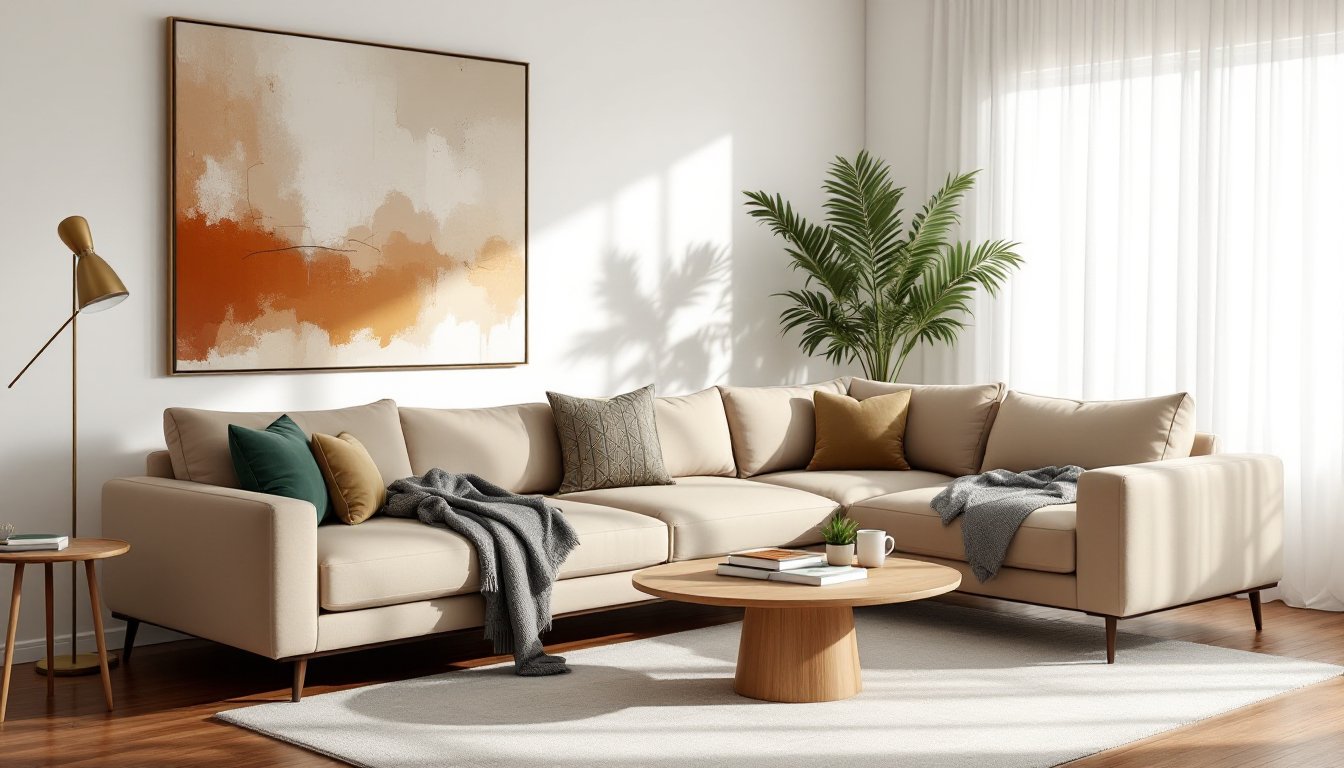
Throw pillows: Use an odd number (3, 5, or 7) for visual balance. Mix sizes, pair 22-inch square pillows in the corners with 18-inch or lumbar pillows (12×20 inches) in front. Layer textures: combine a linen pillow with a velvet or faux fur accent. Avoid matching pillow sets: they look staged. Instead, choose a cohesive color palette (e.g., warm neutrals with one accent color).
For inserts, use down-alternative or feather-down blends rather than cheap polyester fills, which flatten quickly. Inserts should be 1–2 inches larger than the cover (a 20-inch insert in an 18-inch cover) for a full, plump look.
Throws: Drape a 50×60-inch throw over one arm or the back corner of the couch. Avoid centering it perfectly, casual draping looks more natural. Chunky knit throws add texture in fall and winter: lightweight linen or cotton works in warmer months. Choose a throw that complements but doesn’t exactly match the pillow colors.
Rugs: The couch should sit partially on the rug or have its front legs on it. A common mistake is choosing a rug that’s too small, most living rooms need at least an 8×10-foot rug to anchor the seating area. Ensure all furniture legs (couch, chairs, coffee table) at least touch the rug.
Side tables and lighting: Flank the couch with end tables 24–26 inches tall (level with the arm or slightly lower). Add table lamps or floor lamps for task lighting, overhead lighting alone creates harsh shadows. In modern layouts, a C-shaped side table that slides under the couch works for laptops or drinks without taking floor space.
Artwork and mirrors: Hang art 8–10 inches above the couch back. A single large piece (48–60 inches wide) or a gallery wall works: avoid tiny frames that get lost. Mirrors opposite windows reflect light and make rooms feel larger.
Conclusion
A well-chosen couch anchors a living room, but it needs the right style, fabric, layout, and accessories to perform. Prioritize durable frames, appropriate sizing for the space, and fabrics that match the household’s lifestyle. Measure doorways and rooms before purchasing, and don’t skip the prep work of testing fabrics and checking construction details. With these considerations in place, the couch will serve as both a functional and visual centerpiece for years.