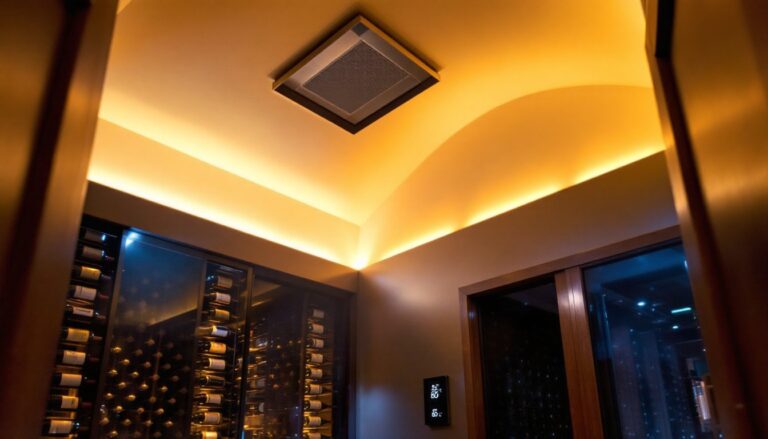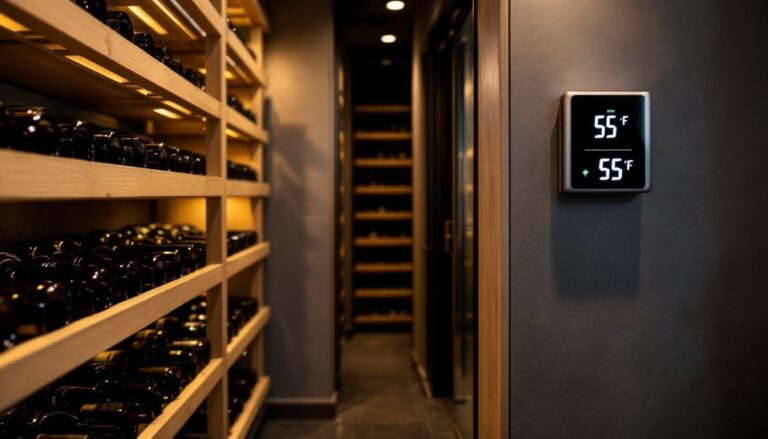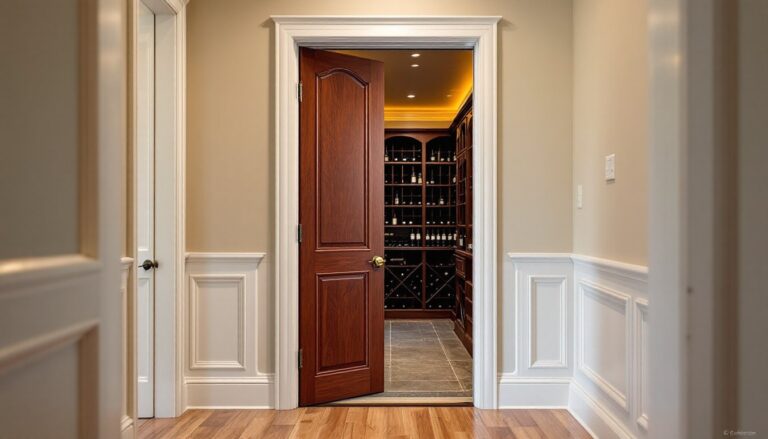
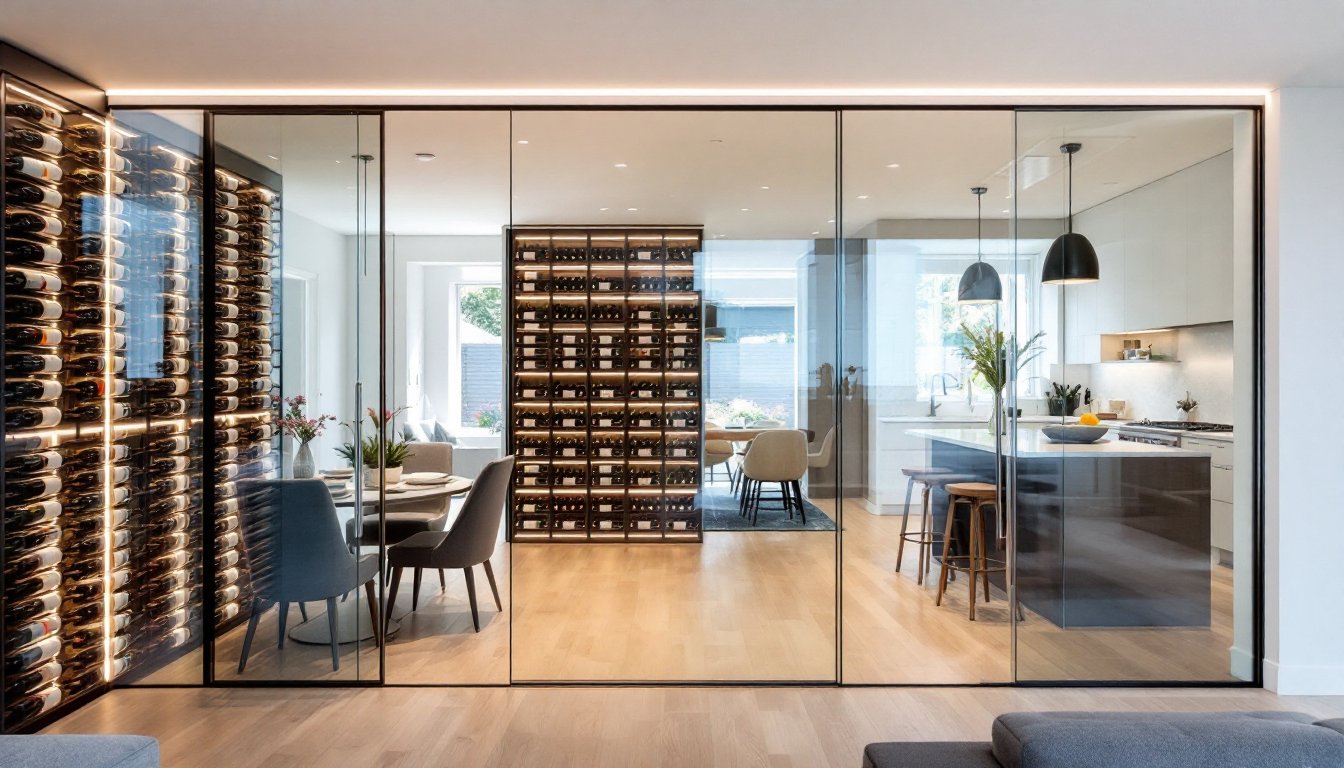

A glass wine cellar transforms wine storage from a dark basement afterthought into a striking architectural feature. Unlike traditional cellars hidden behind closed doors, glass-enclosed designs showcase a collection while maintaining precise climate control. They’re showing up in kitchens, dining rooms, under staircases, and even as room dividers, anywhere a homeowner wants to make wine storage part of the living space. The appeal is straightforward: controlled environment meets visual impact. But building one right requires understanding the intersection of HVAC, structural support, and glass specifications. This guide covers what sets glass wine cellars apart, where they work best, and what it takes to install one that protects the wine as well as it displays it.
Key Takeaways
- A glass wine cellar transforms wine storage into a visible design feature by combining insulated glass, climate control, and strategic lighting while maintaining 55–58°F temperatures and 60–70% humidity for optimal preservation.
- Glass wine cellars are best suited for kitchens, dining rooms, under staircases, and small spaces where traditional basement cellars aren’t feasible, making them ideal for open-concept homes and high-value properties.
- Insulated dual-pane glass with at least R-3 thermal resistance is essential to prevent heat loss; single-pane glass will compromise the cooling system’s ability to maintain proper wine storage conditions.
- Installation costs range from $3,000–$8,000 for DIY reach-in designs to $40,000+ for professional walk-in cellars, with specialized cooling systems ($1,500–$6,000) being the largest investment after glass and framing.
- Proper sealing, weatherstripping, electrical planning, and a correctly sized cooling unit (factoring 20% overhead for glass surface area) are critical to prevent wine spoilage and avoid costly system failures.
- Glass wine cellars typically increase home value and appeal to premium buyers, though they cost 20–40% more than traditional enclosed cellars due to specialized materials and complex climate control requirements.
What Is a Glass Wine Cellar and Why Choose One?
A glass wine cellar is a climate-controlled storage space enclosed by glass walls or panels rather than traditional drywall or masonry. It uses insulated or tempered glass, dedicated cooling systems, and often LED lighting to create a functional display area for wine bottles.
The primary draw is visibility. A glass wall wine cellar turns storage into a design statement, whether it’s a floor-to-ceiling installation in a modern kitchen or a compact reach-in adjacent to the dining room. The glass creates visual continuity, spaces feel larger and more connected, while still isolating the cellar environment from ambient temperature and humidity.
Homeowners choose glass cellars for three main reasons: they want to show off their collection, they lack dedicated basement or closet space, or they’re renovating and want to integrate storage into the floor plan without adding closed-off rooms. Glass cellars also suit smaller footprints better than traditional builds, since even a 4 ft × 6 ft enclosure can hold 200+ bottles when racking is optimized.
That said, glass introduces thermal challenges. Standard single-pane glass bleeds heat, so most glass wine cellars require dual-pane insulated glass rated for thermal resistance. Without proper insulation and a correctly sized cooling unit, the enclosure becomes an expensive display case for spoiled wine.
Key Benefits of Glass Wine Cellars
Aesthetic Integration: Glass cellars blend into open-concept layouts. They don’t interrupt sightlines or make a room feel sectioned off, which is why designers often use them as room dividers or install them in open corners.
Accessibility: Unlike a basement cellar requiring a trip downstairs, a glass wine cellar in the kitchen or dining area keeps bottles within arm’s reach. This suits collectors who rotate through their inventory regularly.
Increased Home Value: A well-executed glass wine cellar signals intentional design and serves as a focal point during showings. Real estate professionals note that homes with integrated wine storage, especially visible, climate-controlled designs, appeal to buyers in higher price brackets.
Space Efficiency: Because glass offers visibility, homeowners can build smaller enclosures and still achieve visual impact. A 3 ft × 8 ft walk-in can feel substantial when viewable from multiple rooms.
UV Protection Options: Modern insulated glass can include low-E coatings or tinted films that block ultraviolet light, which degrades wine over time. This allows placement near windows or in naturally lit areas without compromising bottle integrity.
The tradeoff is cost. Glass cellars typically run 20–40% more than equivalent enclosed cellars due to specialized glass, custom framing, and more complex climate control.
Types of Glass Wine Cellar Designs
Freestanding Glass Enclosures
These are fully enclosed cellars with glass on three or four sides, often positioned as room dividers or in open corners. Framing is usually aluminum or steel, powder-coated to match interior finishes. Door options include frameless swing doors with magnetic seals or pivot doors with concealed hinges.
Glass Wall Wine Cellar (Single-Wall)
A single glass panel replaces one wall of a conventional cellar, leaving the other three walls insulated with drywall or closed-cell foam. This design suits placements along hallways, under stairs, or recessed into existing closets. The glass wall faces into a living area, while the back and sides remain thermally isolated.
This approach reduces glass costs and simplifies climate control since only one surface is transparent. It’s the most common DIY-friendly option for retrofits.
Reach-In Display Cellars
Compact units, often 2 ft to 3 ft deep, installed into a wall cavity. These function like built-in refrigerators but with racking instead of shelves. Glass fronts are typically double-pane with aluminum frames. Cooling units mount externally or through the back wall.
Reach-ins work in condos, apartments, or anywhere square footage is tight. Capacity ranges from 50 to 150 bottles depending on height.
Walk-In Glass Cellars
Full rooms with frameless or minimally framed glass walls. These require the most planning, structural support for the glass weight, dedicated HVAC, and often a vapor barrier behind any non-glass surfaces. Walk-ins start around 6 ft × 8 ft and can house 500+ bottles with floor-to-ceiling racking.
Frameless glass (often ½-inch tempered) creates the cleanest look but demands precise installation and structural backing, typically steel posts or floor-mounted channels.
Essential Features for Proper Wine Storage
Temperature Control: Wine cellars require consistent 55°F to 58°F for long-term aging. Glass cellars need through-wall or ducted cooling systems rated for the enclosure’s cubic footage and glass surface area. Underpowered units cycle constantly and fail early. Oversized units short-cycle and create humidity swings.
Humidity Management: Target 60–70% relative humidity to keep corks from drying out. Most wine cellar cooling units include humidistats, but glass enclosures in dry climates may need supplemental humidifiers or water reservoirs inside the unit.
Insulated Glass: Use dual-pane insulated glass with a minimum R-value of 3. Low-E coatings improve thermal performance and block UV without tinting heavily. Avoid single-pane or standard tempered glass, it won’t hold temperature.
Weatherstripping and Seals: Doors require magnetic or compression gaskets to prevent air leaks. Even small gaps compromise climate control and overwork the cooling system.
Lighting: LED strip lighting or recessed puck lights provide visibility without heat buildup. Incandescent and halogen bulbs raise internal temperature and accelerate wine degradation. Position lights to illuminate labels without direct bottle exposure.
Racking: Modular metal or wood racking systems maximize bottle capacity. Label-forward racking (bottles stored horizontally with labels visible) works best in glass cellars since the display is the point. Allow ¾ inch to 1 inch clearance between bottle necks for easy access.
Installation Considerations and Best Locations
Structural Support: Glass is heavy. ½-inch tempered glass weighs roughly 6.5 lbs per square foot: insulated dual-pane panels can hit 8–10 lbs per square foot. Floor joists and wall framing must support the combined weight of glass, framing, racking, and bottles. For walk-ins, consult a structural engineer or contractor to verify load capacity and add blocking or reinforcement as needed.
Ideal Locations: Interior walls away from exterior doors, windows, and HVAC vents work best. Basements and interior first-floor rooms offer the most stable ambient conditions. Avoid placements near:
- Direct sunlight (even with UV coatings, heat gain is an issue)
- Exterior walls in climates with temperature extremes
- High-traffic areas where doors open frequently
Under-stair installations are popular for glass wine cellars, they use otherwise wasted space and create dramatic sightlines from entryways or living rooms.
Electrical and HVAC: Plan for a dedicated 15-amp or 20-amp circuit for the cooling unit. Through-wall units require a 6-inch to 8-inch core-drilled hole for the condenser. Ducted systems need access to existing HVAC or a mini-split setup. Some jurisdictions classify wine cellars as habitable space and require ventilation per IRC standards, check local codes.
Permits: Glass wine cellars typically don’t require permits unless they involve structural changes (removing load-bearing walls, adding electrical circuits, or core-drilling exterior walls). If the project includes plumbing for a humidifier or modifying HVAC ductwork, permits may apply. Confirm with the local building department before starting work.
Vapor Barriers: Install 6-mil polyethylene sheeting on the warm side of any insulated walls to prevent condensation from migrating into wall cavities. This is critical in mixed climates where indoor humidity fluctuates seasonally.
Cost Factors and Budgeting Tips
Glass and Framing: Insulated glass runs $75–$150 per square foot installed, depending on thickness, coatings, and frame style. Frameless systems cost more due to precision fabrication and hardware (hinges, handles, floor channels). Aluminum-framed systems are more budget-friendly and easier to source locally.
Cooling Systems: Expect $1,500–$4,000 for a quality through-wall or ducted unit sized for a small to mid-size cellar (up to 1,000 cubic feet). High-end ducted or split systems for walk-ins can reach $6,000+. Undersizing to save money leads to system failure and wine spoilage, factor in 20% overhead for glass surface area when calculating BTU requirements.
Racking: Modular metal racking starts around $8–$12 per bottle capacity. Custom wood racking (mahogany, redwood) runs $15–$30+ per bottle. Label-forward systems cost more than traditional bin-style storage due to added material and hardware.
Labor: Professional installation for a turnkey glass wine cellar ranges from $10,000 to $40,000+ depending on size, location, and finishes. DIY-friendly reach-ins or single-wall designs can be tackled for $3,000–$8,000 in materials if the homeowner handles framing, glass ordering, and cooling unit installation.
Cost-Saving Strategies:
- Use one or two glass walls instead of full enclosures
- Source insulated glass from commercial suppliers rather than custom fabricators
- Install prefab modular cellar kits designed for glass fronts
- Handle framing and racking yourself, hire pros only for glass and HVAC
Regional Variations: Urban markets (New York, San Francisco, Los Angeles) see labor premiums of 30–50% over national averages. Material costs for glass and cooling units are more consistent nationwide, though shipping for heavy glass panels can add several hundred dollars in remote areas.
Conclusion
Glass wine cellars succeed when the design balances visibility with climate control. The glass showcases the collection, but insulated panels, proper sealing, and correctly sized cooling systems do the actual work of preserving the wine. Homeowners who treat this as a mechanical project first and a design feature second end up with cellars that function as well as they look. Start with location, confirm structural capacity, size the cooling system with overhead for glass, and don’t skimp on insulation or seals. Done right, a glass wine cellar becomes both a practical storage solution and a standout feature that elevates the entire space.