
Hand-washing delicate wine glasses after every dinner party gets old fast. Between scrubbing fragile stems, dodging water spots, and worrying about chips, it’s a chore most homeowners would gladly skip. That’s where dishwasher safe wine glasses come in, stemware engineered to handle the heat, spray, and tumble of a modern dishwasher without cracking, clouding, or losing its shine. The right set combines durability with the kind of clarity and balance that makes wine taste the way it should. This guide breaks down what makes wine glasses genuinely dishwasher safe, how to choose the best options for different wines, and how to keep them looking pristine cycle after cycle.
Key Takeaways
- Dishwasher safe wine glasses eliminate hand-washing hassles while saving up to 24 gallons of water per load compared to manual washing, making them practical for regular entertaining.
- Tempered soda-lime glass and titanium-reinforced crystal are the most durable materials for dishwasher safe options, resisting thermal shock and clouding from detergent exposure.
- Proper loading on the top rack, avoiding overcrowding, and using gentle wash cycles with low-phosphate detergent significantly extend the lifespan of dishwasher safe wine glasses.
- Different wine styles benefit from specific bowl shapes—red wines need larger 16 to 20-ounce bowls, while white wines work best in smaller 10 to 14-ounce designs, all available in dishwasher safe variants.
- Air drying instead of machine heat drying prevents stress-related micro-cracks and maintains the clarity of dishwasher safe wine glasses over time.
- Hard water mineral buildup is the most common cause of clouding; running a monthly vinegar cycle preserves glass clarity without requiring replacement.
Why Dishwasher Safe Wine Glasses Are a Game-Changer
Most traditional wine glasses aren’t built for the dishwasher. Thin crystal stems snap under water pressure, lead crystal clouds from detergent exposure, and hand-blown pieces can’t handle temperature swings. The result? Either a sink full of hand-washing or a cabinet full of damaged stemware.
Dishwasher safe wine glasses solve this problem by using tempered glass, reinforced stems, and materials engineered to resist thermal shock. They’re designed for everyday use, not just special occasions, because no one wants to baby their glassware after a Tuesday night pasta dinner.
Beyond convenience, these glasses save time and water. A full dishwasher load uses roughly 3 to 5 gallons of water, while hand-washing the same number of items can use 27 gallons or more depending on technique. For households that entertain regularly or simply enjoy wine with dinner, that adds up.
Durability doesn’t mean sacrificing quality, either. Modern dishwasher safe options offer the same bowl shapes, rim profiles, and weight distribution as traditional stemware. The difference is what happens after the last sip.
What Makes Wine Glasses Truly Dishwasher Safe?
Not all wine glasses labeled “dishwasher safe” hold up equally well. True durability comes down to material composition, manufacturing process, and design.
Tempered soda-lime glass is the workhorse of dishwasher safe stemware. It undergoes a controlled heating and cooling process that increases strength and resistance to thermal shock. These glasses can handle the 140°F to 160°F temperatures in a typical dishwasher’s main wash cycle without cracking. They’re also less prone to chipping than untreated glass.
Titanium-reinforced crystal is a newer category. Manufacturers replace lead with titanium dioxide, creating crystal-clear glass that’s both brilliant and tough. It won’t cloud from alkaline detergents, and the material resists scratching from dish racks and other glassware.
Lead-free crystal blends clarity with durability, though not all formulations are dishwasher safe. Look for products specifically labeled as such, many brands now use magnesium or zinc instead of lead to achieve the refractive qualities of traditional crystal without the fragility.
The stem and base design also matters. One-piece construction (where the bowl, stem, and base are formed as a single unit rather than fused together) eliminates weak points where parts can separate under pressure. Pulled stems, drawn from the same piece of molten glass as the bowl, are stronger than attached stems.
Material Matters: Glass Types That Survive the Dishwasher
Soda-lime glass makes up about 90% of manufactured glass worldwide. It’s affordable, recyclable, and, when tempered, highly resistant to breakage. Expect a slightly heavier feel compared to crystal, but excellent everyday performance.
Crystalline glass (often branded under names like Tritan or similar) is a lead-free option that mimics the clarity and ring of crystal. It’s engineered for machine washing and resists the etching that plagues softer glass over time.
Borosilicate glass, known for laboratory glassware and high-end cookware, occasionally appears in wine glass design. It handles extreme temperature changes better than any other type, though it’s less common due to higher production costs.
Avoid hand-blown or artisan crystal in the dishwasher unless explicitly rated for it. The annealing process (slow cooling to relieve internal stress) used in artisan work often doesn’t provide the uniform stress distribution needed to survive dishwasher conditions.
Best Dishwasher Safe Wine Glasses for Every Occasion
Choosing the right dishwasher safe wine glasses depends on what’s being poured and how often they’ll be used. Different wine styles benefit from specific bowl shapes and rim designs, even when durability is the priority.
Universal wine glasses offer a middle-ground bowl size, typically 12 to 16 ounces, that works for both reds and whites. They’re ideal for households that don’t want separate sets. Look for a slightly tapered rim to concentrate aromas and a wide enough bowl to let reds breathe.
Stemless wine glasses trade traditional elegance for stability and storage efficiency. They’re harder to knock over, stack more compactly, and many users find them easier to handle. The downside: hand warmth transfers directly to the wine, which matters more for whites and sparkling wines served chilled.
Sparkling wine flutes in dishwasher safe versions use reinforced stems and thicker bases. The narrow bowl preserves carbonation longer than wide-mouth options. If space is tight, consider tulip-shaped sparkling glasses, they’re more versatile than traditional flutes and take up less room in the dishwasher.
Top Picks for Red and White Wine Lovers
For red wines, look for glasses with a 16- to 20-ounce bowl and a wide opening. Burgundy and Pinot Noir benefit from a broader bowl that exposes more wine to air, while Cabernet and Merlot work well in a slightly taller, narrower shape. Dishwasher safe options in this category often use titanium-reinforced crystal to keep walls thin without sacrificing strength.
White wine glasses typically feature a smaller bowl, 10 to 14 ounces, to maintain cooler serving temperatures. A narrower opening directs delicate aromatics toward the nose. Tempered soda-lime glass performs well here, as the slightly heavier construction helps keep the wine cool longer.
Rosé and dessert wines pair nicely with glasses in the 8- to 12-ounce range. Shorter stems and wider bases improve stability, which matters when serving sweeter wines that tend to linger in the glass.
How to Care for Your Dishwasher Safe Wine Glasses
Even dishwasher safe glasses last longer with a few smart loading and maintenance practices.
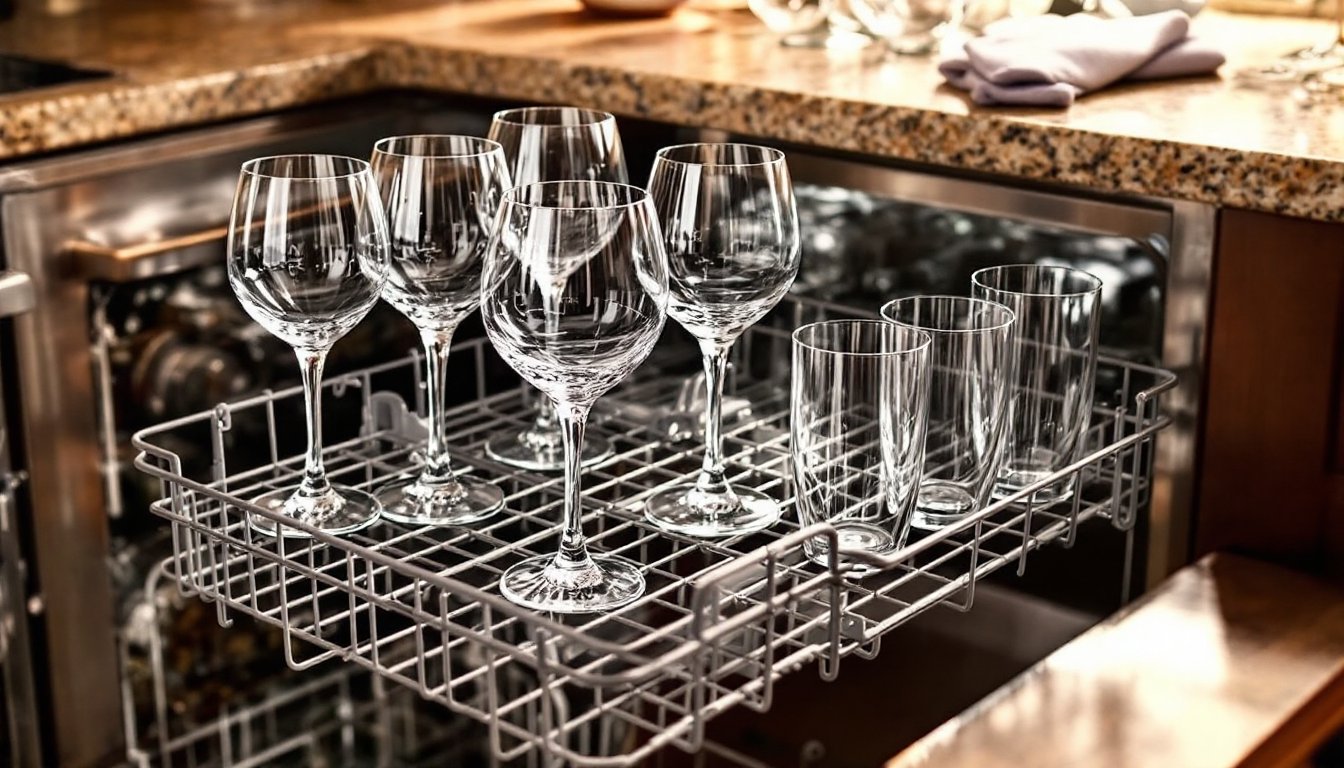
Loading technique makes a difference. Place glasses on the top rack only, the upper spray arm uses lower water pressure and slightly cooler temperatures than the bottom rack. Position each glass between tines, not over them, to prevent pressure points that can cause cracking. Avoid nesting glasses or letting them touch: vibration during the wash cycle can cause chipping where rims contact.
Detergent choice affects clarity over time. Use a low-phosphate or phosphate-free powder or gel formulated for glassware. Tablets and pods sometimes concentrate detergent in one spot, leading to etching. Skip the extra rinse aid if glasses come out spotty, too much rinse aid can leave a film on glass surfaces.
Water hardness is a factor many homeowners overlook. Hard water (above 7 grains per gallon) deposits minerals on glass, creating a cloudy film that builds up over cycles. If this is an issue, consider installing a whole-house water softener or use a dishwasher additive designed to counteract mineral buildup.
Air drying beats heat drying for wine glasses. The high heat of a drying cycle can stress glass and exacerbate any minor flaws in the material. Crack the dishwasher door after the rinse cycle and let glasses air dry, or remove them and hand-dry with a lint-free microfiber cloth to prevent water spots.
Storage should keep glasses stable and dust-free. Store them upright rather than inverted, hanging a glass by its rim puts stress on the thinnest part. If cabinet space is limited, use a stemware rack, but ensure glasses don’t knock together when the rack slides.
Common Mistakes That Damage Wine Glasses in the Dishwasher
Even dishwasher safe glasses aren’t indestructible. A few common errors lead to most breakage and clouding.
Overloading the dishwasher is the top culprit. Cramming too many items into one load increases the chance of glasses knocking into each other or hard items like pots and utensils. If glasses can’t sit securely without touching, run a second load.
Using the wrong wash cycle can cause problems. Heavy-duty or pots-and-pans cycles use higher temperatures and stronger spray pressure than necessary for glassware. Stick to normal or gentle cycles with a water temperature around 120°F to 140°F.
Skipping pre-rinsing for lipstick or wine residue sometimes leads users to rewash glasses, doubling the exposure to heat and detergent. A quick rinse under the tap before loading removes stubborn residue without requiring a second cycle.
Ignoring manufacturer guidelines is a mistake. Even within dishwasher safe categories, some glasses have specific recommendations, such as avoiding high-heat drying or using only certain detergents. Check any included care instructions, especially for higher-end stemware.
Mixing glass types in the same load can be risky. Heavier, non-tempered glassware or ceramics can knock into wine glasses during the wash cycle. When possible, dedicate a load to stemware and other delicate items.
Temperature shock from placing cold glasses into a hot dishwasher (or vice versa) can cause micro-cracks over time. Let glasses come to room temperature before loading if they’ve been chilled, and avoid running a hot cycle immediately after loading cold items.
Finally, clouding from hard water is often mistaken for damage, but it’s actually a buildup of minerals. Run an empty dishwasher with white vinegar (about 2 cups in the bottom) once a month to dissolve mineral deposits and keep the interior clean. This prevents transfer to glassware during regular cycles.
Dishwasher safe wine glasses deliver the durability needed for regular use without compromising the drinking experience. By understanding what makes them strong, choosing the right material and design for specific wines, and following a few simple care practices, homeowners can enjoy quality stemware that lasts, cycle after cycle.