
Wine glasses are among the most fragile items in any kitchen, and tossing them in the dishwasher can feel like a gamble. Some emerge spotless and intact, while others develop cloudy film, tiny chips, or even shatter mid-cycle. The truth is, not all wine glasses are created equal when it comes to dishwasher safety. Material composition, construction quality, and how they’re loaded all play critical roles in whether a glass survives the wash. This guide breaks down which wine glasses can handle the heat, how to spot dishwasher-safe stems, and the best practices for keeping glassware crystal-clear without hand-washing every time.
Key Takeaways
- Not all wine glasses are dishwasher safe—soda-lime glass handles dishwashers better than delicate lead crystal, which is prone to etching and cloudiness.
- Always check for a dishwasher-safe symbol on packaging or the glass itself, and avoid washing hand-painted, metallic-trimmed, antique, or lead crystal wine glasses in the dishwasher.
- Load wine glasses on the top rack only, space them generously to prevent contact with other items, skip the heated dry cycle, and use gentle, low-phosphate detergent to minimize damage.
- Hard water deposits and permanent etching are the main threats to wine glass clarity—use a rinse aid and lower water heater temperature to prevent cloudiness, but know that etching cannot be reversed.
- Hand washing in warm water with mild soap is the safest option for crystal stemware, vintage glasses, and ultra-delicate wine glasses to preserve their beauty and longevity.
Understanding Wine Glass Materials and Dishwasher Safety
The material a wine glass is made from determines whether it can withstand the high heat, water pressure, and detergent exposure inside a dishwasher. Most wine glasses fall into two categories: standard soda-lime glass or crystal. Each reacts differently to the dishwasher environment.
Soda-lime glass is the workhorse of everyday glassware. It’s durable, affordable, and typically handles dishwasher cycles well. Most mass-produced wine glasses sold at big-box retailers are made from this material. They’re tempered to resist thermal shock, meaning they won’t crack when exposed to rapid temperature changes during the wash and dry cycles.
Crystal, on the other hand, is more delicate. It contains lead oxide or other minerals that give it clarity, brilliance, and a distinct ring when tapped. Lead crystal, in particular, is porous and softer than standard glass, making it vulnerable to etching and cloudiness from harsh detergents and high heat. Even lead-free crystal (often labeled as such for safety) is more fragile than soda-lime glass.
Crystal vs. Glass: What’s the Difference?
Crystal contains at least 24% lead oxide (for traditional lead crystal) or substitutes like barium or zinc in lead-free versions. This composition makes it more refractive, light bends through it beautifully, but also more prone to damage. The added minerals soften the material, allowing artisans to hand-cut intricate patterns, but they also make the glass more susceptible to scratching and chemical reactions with dishwasher detergent.
Standard glass is harder, less porous, and more stable under heat. It won’t develop the same level of cloudiness as crystal, though it’s not immune to etching if exposed to harsh conditions repeatedly. For daily-use wine glasses, soda-lime glass is the safer bet for regular dishwasher cycles.
How to Tell If Your Wine Glasses Are Dishwasher Safe
Most manufacturers print a dishwasher-safe symbol on packaging or etch it into the glass itself. Look for a small icon showing dishes inside a box with water droplets, that’s the universal dishwasher-safe mark. If the glass is unmarked, check the manufacturer’s website or product description.
Here’s what to look for:
- Packaging labels: Boxes for new glassware often state “dishwasher safe” or “top rack safe” directly on the front or side panel.
- Etched symbols: Some higher-end brands etch a tiny dishwasher icon on the base or stem of the glass.
- Material disclosure: If the label says “lead crystal” or “hand-cut crystal,” assume it’s not dishwasher safe unless explicitly stated otherwise.
- Weight and thickness: Thin, delicate stems and ultra-fine rims are red flags. These are more likely to chip or snap under the pressure of dishwasher spray arms and contact with other items.
When in doubt, contact the manufacturer. Many brands maintain online databases or customer service lines that can confirm whether a specific model is dishwasher-rated. Vintage or antique wine glasses, especially those with gold or silver trim, should never go in the dishwasher, the metallic finishes will degrade and flake off.
Best Practices for Washing Wine Glasses in the Dishwasher
Loading wine glasses in the dishwasher properly reduces the risk of breakage and keeps them clear. Here’s how to do it right:
-
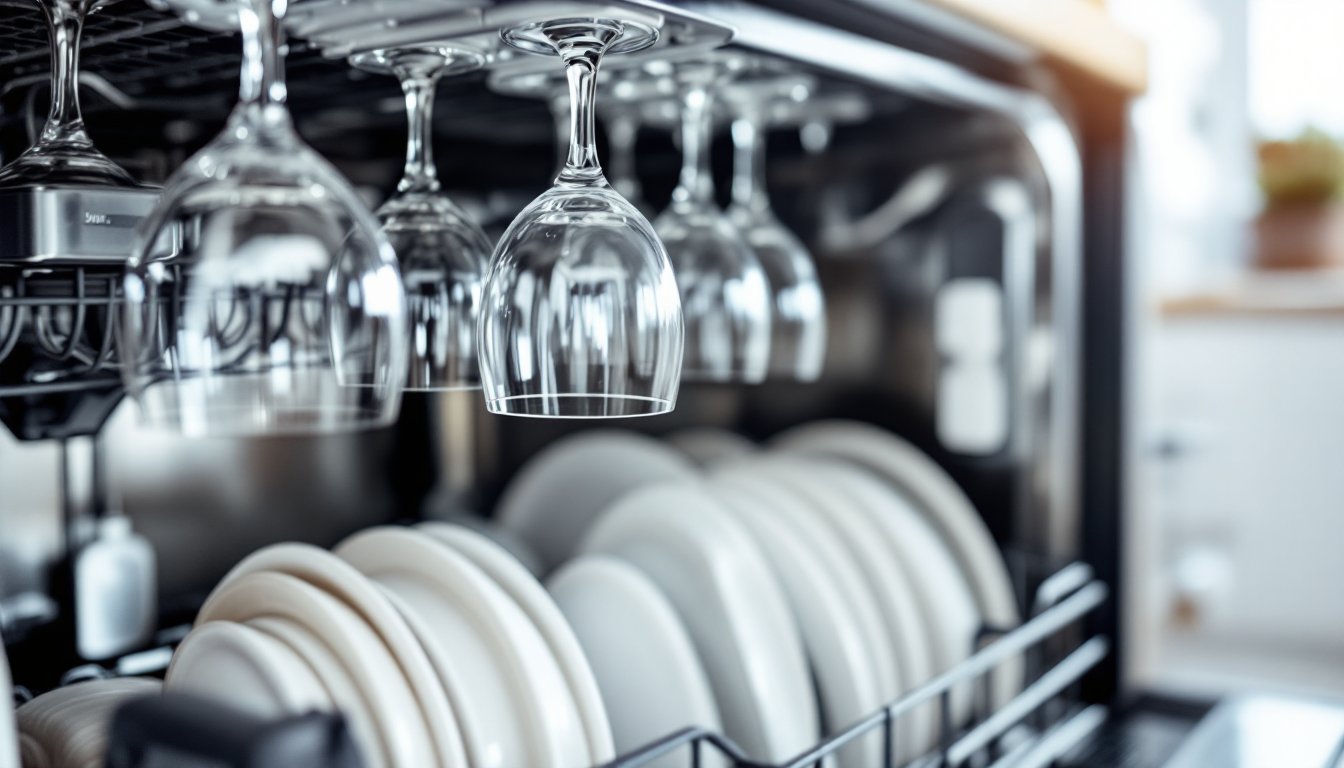
Use the top rack only. The bottom rack sits closer to the heating element, exposing glasses to higher temperatures that can cause warping or cracking. Top rack placement also keeps them away from the more aggressive spray jets at the bottom.
-
Space them generously. Wine glasses should never touch each other or other dishes. Contact points create friction during the wash cycle, leading to chips and cracks. Use dishwasher stemware holders if available, or angle glasses between tines to prevent movement.
-
Secure the stems. Position stems so they rest securely in the rack without bearing the full weight of the bowl. Many dishwashers have fold-down tines or specialized clips designed to cradle stemware.
-
Skip the heated dry. High heat is the enemy of delicate glassware. Turn off the heated dry setting and let glasses air-dry instead. Crack the dishwasher door open after the rinse cycle finishes to speed up drying without cranking up the temperature.
-
Choose gentle detergent. Use a low-phosphate or phosphate-free detergent designed for glassware. Harsh formulas accelerate etching. Powder detergents are more abrasive than gels or pods, so opt for liquid or tablet forms when washing wine glasses.
-
Run shorter cycles. If the dishwasher offers an express or delicate cycle, use it. These modes reduce wash time and lower water temperature, both of which help protect fragile glassware.
Common Dishwasher Mistakes That Damage Wine Glasses
Even dishwasher-safe wine glasses can break if loaded incorrectly or washed under the wrong conditions. Here are the most common errors:
-
Overloading the dishwasher. Cramming too many items into one load causes glasses to knock against plates, bowls, and each other. This contact is the leading cause of chips and cracks. If the rack feels crowded, run a second load.
-
Using too much detergent. Extra detergent doesn’t mean cleaner dishes, it means more chemical residue and a higher chance of etching. Follow the detergent manufacturer’s dosage instructions, and adjust for water hardness if needed.
-
Placing glasses at an angle that traps water. If a glass is tilted incorrectly, water pools in the bowl instead of draining. This creates spots and streaks. Always angle glasses so water drains freely toward the bottom of the dishwasher.
-
Washing hand-painted or decorated glasses. Decorative elements like painted designs, metallic accents, or applied decals can’t withstand dishwasher heat and detergent. They’ll fade, peel, or discolor after just a few cycles.
-
Ignoring hard water buildup. Hard water leaves mineral deposits on glassware, creating a cloudy film that gets worse with every wash. Use a rinse aid to reduce spotting, or consider installing a water softener if mineral content is high in the area.
When Hand Washing Is the Better Choice
Some wine glasses should never see the inside of a dishwasher, no matter how careful the loading. Hand washing is the only safe option for:
-
Lead crystal or fine crystal glassware. The porous nature of crystal makes it vulnerable to etching and cloudiness. Hand wash with warm (not hot) water and a soft sponge.
-
Antique or vintage glasses. Older glassware wasn’t manufactured with dishwasher durability in mind. The glass may be thinner, and any decorative elements are likely fragile.
-
Glasses with gold, silver, or platinum trim. Metallic accents will tarnish and flake off in the dishwasher. Hand wash these immediately after use.
-
Ultra-thin stemware. If the rim is so delicate it feels like it might break with a firm grip, it’s too fragile for the dishwasher. Wash by hand in a plastic basin to avoid contact with the sink’s hard surface.
To hand wash wine glasses properly, fill a basin with warm water and a few drops of mild dish soap. Wash one glass at a time, supporting the bowl while cleaning the stem. Rinse under warm running water and air-dry upside down on a microfiber towel to prevent water spots.
How to Prevent Cloudiness and Etching on Wine Glasses
Cloudy wine glasses are a common complaint, and the issue usually stems from one of two causes: hard water deposits or etching.
Hard water leaves a white, filmy residue that can be removed. Try soaking glasses in a solution of equal parts white vinegar and warm water for 15 minutes, then scrub gently with a soft cloth. This dissolves mineral buildup without scratching the glass.
Etching, but, is permanent. It occurs when the glass surface is chemically worn away by harsh detergents, high heat, or soft water combined with phosphate-based detergents. The glass takes on a frosted, sandblasted appearance that can’t be reversed.
To prevent both issues:
- Use a rinse aid. Rinse aids help water sheet off glass instead of beading up, reducing spots and film.
- Lower the water heater temperature. If the dishwasher’s water is hotter than 140°F, turn down the water heater. Excessive heat accelerates etching.
- Choose the right detergent. Look for formulas labeled “safe for glassware” or “anti-etching.” Avoid powders with high alkalinity.
- Test water hardness. Home test kits are available at hardware stores. If water is very hard (above 10 grains per gallon), install a water softener or switch to a detergent formulated for hard water.
- Don’t pre-rinse excessively. Modern dishwashers rely on food particles to activate enzymes in detergent. Without them, detergent can become overly aggressive and attack the glass itself. A quick scrape is enough.
Once wine glasses develop etching, there’s no fixing them. Prevention is the only strategy that works long-term.