
Serious wine enthusiasts know the frustration: reds taste better at 55–65°F, whites at 45–50°F, and a standard kitchen fridge sits at a wine-damaging 35–38°F. A dual zone wine refrigerator solves this dilemma by offering two independently controlled compartments in one appliance, allowing proper storage for both varietals without compromise. Unlike single-zone units or makeshift storage solutions, dual zone models maintain precise, stable temperatures that preserve flavor profiles, prevent premature aging, and keep wines ready to serve at their ideal drinking temperatures. For anyone building a collection that spans Pinot Noir and Chardonnay, understanding how these units work, and what separates a quality model from a mediocre one, makes all the difference.
Key Takeaways
- A dual zone wine refrigerator solves the temperature mismatch problem by maintaining reds at 55–65°F and whites at 45–50°F, keeping both varietals at their ideal drinking temperature without compromise.
- Dual zone models feature two independently controlled compartments with separate cooling controls, preventing the temperature bleed that makes standard kitchen fridges unsuitable for wine storage.
- Choose thermoelectric cooling for quiet, vibration-free operation or compressor-based refrigeration for stronger, more consistent cooling in warmer environments—the right choice depends on your location and wine collection size.
- Proper setup is critical: allow 24 hours for acclimate, set initial temperatures to 50°F (upper zone) and 60°F (lower zone), and monitor with an independent thermometer to ensure accurate long-term storage and serving conditions.
- Invest in a dual zone wine refrigerator if your collection includes equal proportions of reds and whites; opt for a single zone model if you focus on one wine type or have budget constraints and limited space.
What Is a Dual Zone Wine Refrigerator?
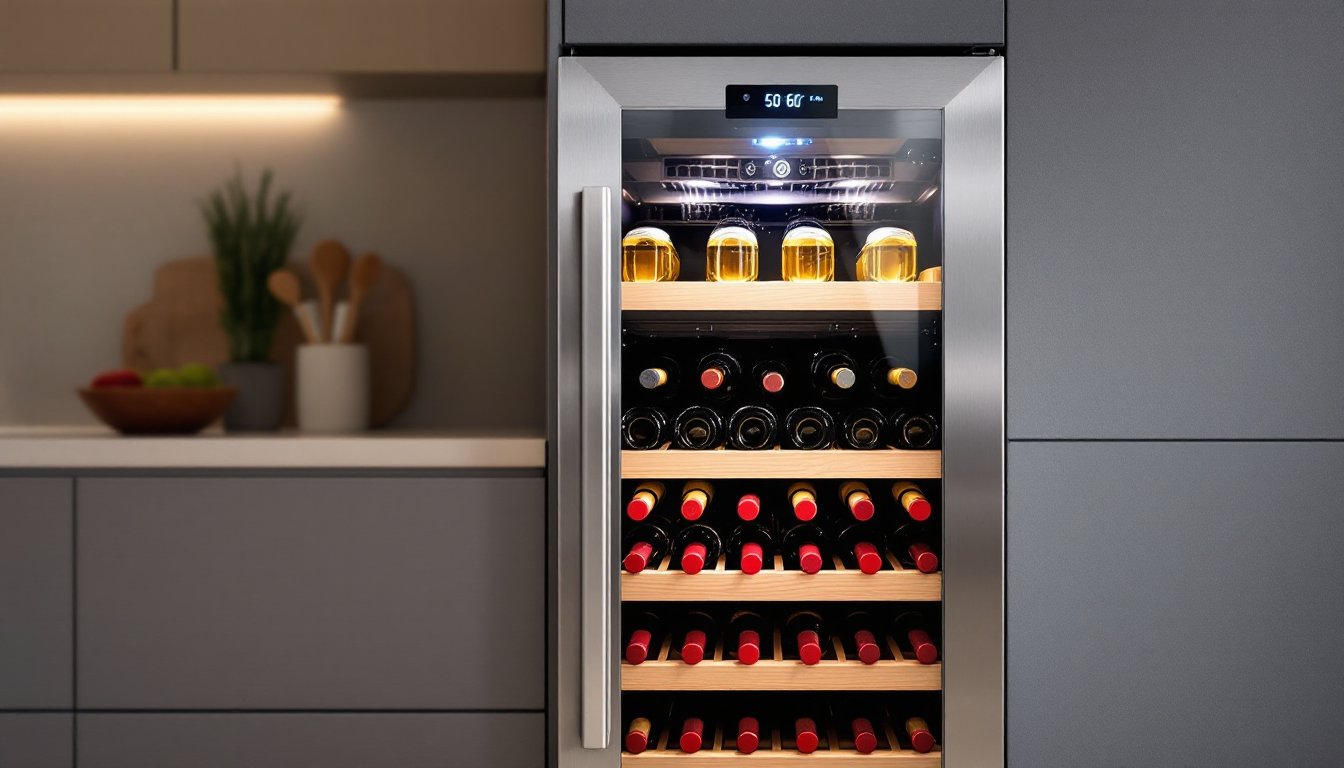
A dual zone wine refrigerator features two separate temperature compartments within a single cabinet, each with independent cooling controls. The typical layout places one zone above the other, separated by an insulated divider that prevents temperature bleed between sections. Most units range from 18 to 46 bottles in capacity, though larger freestanding models can hold 100+ bottles.
The upper zone typically runs cooler (40–50°F), ideal for white wines, sparkling wines, and rosés. The lower zone operates warmer (50–65°F), suited for red wines and long-term storage. Some models reverse this configuration or offer side-by-side zones instead of stacked compartments.
These fridges use either thermoelectric cooling or compressor-based refrigeration. Thermoelectric models are quieter and vibration-free, important since vibration disturbs sediment and accelerates aging, but they struggle in hot ambient environments and offer less cooling power. Compressor units deliver stronger, more consistent cooling and work reliably in warmer rooms, but they produce slight vibration and operational noise similar to a standard refrigerator.
Most dual zone fridges include UV-resistant glass doors to protect wine from light damage, interior LED lighting, and slide-out wood or metal racks designed to cradle bottles horizontally, keeping corks moist and sealed.
Why You Need Separate Temperature Zones for Wine Storage
Wine chemistry is temperature-sensitive. Storing bottles at the wrong temperature accelerates oxidation, dulls aromatics, and throws tannins out of balance.
Red wines develop their full flavor profile when stored and served between 55–65°F. Below 50°F, tannins taste harsh and flavors mute. Above 70°F, reds age too quickly, losing complexity and freshness.
White wines and sparkling wines require cooler conditions, 45–50°F for whites, 40–45°F for Champagne and Prosecco. Warmer storage causes whites to lose their crisp acidity and develop flat, flabby flavors.
A standard kitchen refrigerator runs too cold (35–38°F) and dries out corks due to low humidity. Basement or closet storage might work in temperate climates, but most homes fluctuate too much throughout the year, temperature swings of more than 5°F per day stress wine and speed deterioration.
Dual zone refrigerators eliminate these compromises. A collector can store a Cabernet Sauvignon at 60°F in the lower zone while keeping a Sauvignon Blanc at 48°F in the upper zone, both at optimal conditions. Bottles stay ready to serve without waiting for them to warm up or cool down, and long-term aging remains stable and controlled.
For anyone who regularly drinks both reds and whites, or entertains and wants wines ready at serving temperature, the separate zones aren’t a luxury. They’re a practical solution to a real storage problem.
Key Features to Look for in a Dual Zone Wine Fridge
Not all dual zone wine refrigerators deliver the same performance or build quality. Focus on these features before making a purchase.
Temperature Controls and Precision
Digital temperature controls offer better accuracy than analog dials. Look for models that allow independent adjustment of each zone in 1-degree increments. Some budget units only adjust in 5-degree steps, limiting precision.
The temperature range matters. Quality models offer a full span from 40–65°F in each zone, providing flexibility to store everything from Champagne to Bordeaux. Cheaper units may restrict the upper zone to a narrower range, forcing compromises.
Temperature stability is critical. The unit should maintain set temperatures within ±2°F without wild cycling. Check reviews or spec sheets for information on compressor cycling frequency and insulation quality. Poor insulation causes the compressor to run constantly, wasting energy and introducing vibration.
Built-in humidity control or humidity monitoring is a bonus. Wine corks need 50–70% relative humidity to stay sealed. Some premium models include humidifiers or humidity displays: most rely on passive moisture from the cooling process.
Capacity and Bottle Configuration
Bottle capacity ratings assume standard Bordeaux bottles (750ml). If the collection includes Champagne bottles, Pinot Noir bottles with wider shoulders, or magnums, actual capacity drops by 20–30%.
Inspect the rack design. Wood racks (typically beech or pine) cradle bottles gently and look better, but metal racks are more durable and easier to clean. Slide-out racks make it easy to retrieve bottles from the back without disturbing others. Fixed racks save a few dollars but force awkward reaching.
Check shelf spacing. Some models pack shelves tightly to inflate bottle counts, making it difficult to fit larger bottles or remove one without jostling neighbors. Adjustable or removable shelves add versatility.
Door swing direction matters for installation. Freestanding units often offer reversible doors: built-in or under-counter models may not. Measure the installation space and confirm the door opens without hitting cabinetry or walls.
How to Set Up Your Dual Zone Wine Refrigerator
Proper setup and placement ensure the unit performs as designed and wines stay protected.
Step 1: Choose the Location
Place the fridge on a level, solid surface away from direct sunlight, heat sources (ovens, dishwashers, radiators), and high-traffic areas that cause vibration. Freestanding models need 2–3 inches of clearance on all sides for ventilation. Built-in units vent through the front and can sit flush with cabinetry, but confirm the model is rated for built-in installation, using a freestanding unit in an enclosed space causes overheating and compressor failure.
Step 2: Allow the Unit to Acclimate
After delivery, let the fridge sit upright and unplugged for 24 hours before powering it on. Shipping can jostle refrigerant and compressor oil: this rest period lets fluids settle. Plugging in too soon risks compressor damage.
Step 3: Set Initial Temperatures
Power on the unit and set target temperatures: 50°F for the upper zone (whites and sparkling) and 60°F for the lower zone (reds). Allow 24–48 hours for the interior to stabilize before loading bottles. Temperature sensors need time to calibrate, and rushing this step leads to inaccurate readings.
Step 4: Load Bottles Properly
Store bottles horizontally so wine contacts the cork, keeping it moist and sealed. Distribute weight evenly across shelves, overloading one rack can warp it or stress the cooling system. Leave space between bottles for air circulation: packing them too tightly reduces cooling efficiency.
Step 5: Monitor and Adjust
Check temperatures weekly for the first month using an independent thermometer placed inside each zone. Digital displays can drift out of calibration. If readings are off by more than 3°F, recalibrate controls or contact the manufacturer.
Safety note: Dual zone wine fridges draw 100–200 watts during operation. Use a dedicated electrical outlet, not an extension cord or power strip, to prevent overheating and electrical hazards. Most models run on standard 110V household current and don’t require special wiring.
Dual Zone vs Single Zone: Which Wine Refrigerator Is Right for You?
The choice between dual zone and single zone wine refrigerators depends on drinking habits, collection size, and budget.
Choose a dual zone model if:
- The collection includes both reds and whites in roughly equal proportions
- Wines are served regularly and need to stay at drinking temperature
- Space and budget allow for a larger, more feature-rich appliance
- Long-term storage and short-term serving needs must coexist
Dual zone units cost $200–$500 more than comparable single-zone models and consume slightly more energy due to dual cooling systems. They’re worth the investment for mixed collections.
Choose a single zone model if:
- The collection focuses on one wine type (all reds or all whites)
- Wines are primarily stored long-term at a consistent 55°F cellar temperature, with short-term adjustments made before serving
- Budget is tight or available space is limited
- The collection is small (under 18 bottles) and doesn’t justify dual-zone complexity
Single zone fridges are simpler, more affordable, and often more energy-efficient. A collector who drinks mostly reds can set a single zone to 60°F and briefly chill whites in a standard fridge before serving, not ideal, but workable.
Alternative: Multiple Single Zone Units
Some enthusiasts prefer two smaller single-zone fridges instead of one dual-zone model. This approach offers complete temperature independence, easier placement in different rooms, and redundancy if one unit fails. But, it requires more floor space and two electrical outlets.
For serious collectors building a cellar with 50+ bottles and a true mix of varietals, dual zone refrigerators provide the precision and convenience that single-zone models can’t match. For casual drinkers or those just starting a collection, a single zone may be the smarter starting point.