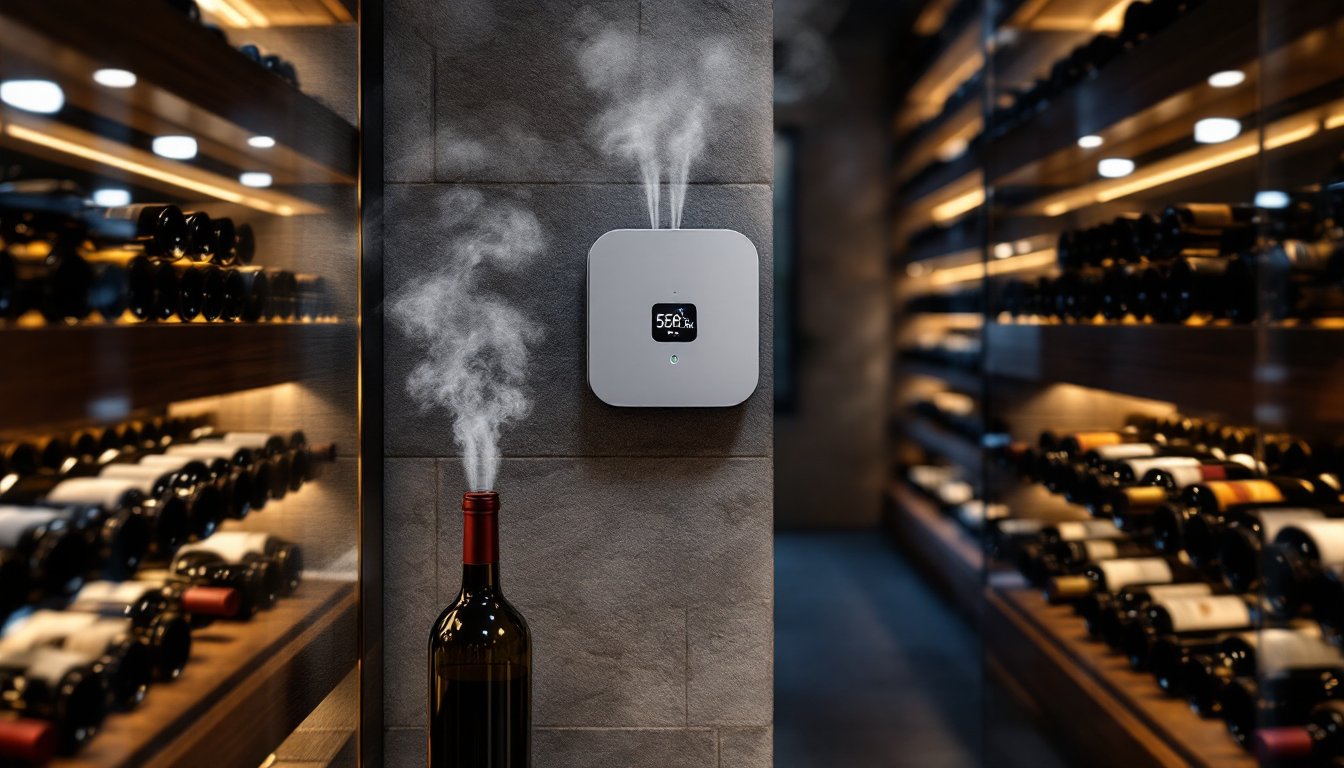

A temperature-controlled wine cellar can still ruin a collection if humidity falls too low. Cork dries out, shrinks, and lets oxygen seep into bottles, turning that 2019 Bordeaux into expensive vinegar. Most home wine cellars maintain temperature just fine but ignore the moisture balance that keeps corks sealed and labels intact. Wine cellar humidifiers aren’t luxury accessories: they’re insurance against slow, silent bottle failure. Whether someone’s converting a basement corner or outfitting a dedicated climate room, getting humidity right from the start saves both wine and money. This guide walks through how these units work, which types suit different setups, and how to dial in the 50–70% relative humidity range serious collectors aim for.
Key Takeaways
- Wine cellar humidifiers are essential to prevent cork shrinkage and oxidation, protecting your collection from premature spoilage by maintaining 55–65% relative humidity.
- Evaporative and ultrasonic humidifiers are the most practical options for home wine cellars, with evaporative models handling larger spaces affordably and ultrasonic units excelling in tight quarters.
- Proper placement, water quality (distilled water for ultrasonic units), and weekly reservoir cleaning prevent mineral deposits, mold, and equipment failure.
- Cellar volume and local climate determine humidifier capacity—measure cubic footage and check baseline humidity before purchasing to avoid undersizing.
- Integrated HVAC humidifiers suit collections of 500+ bottles but aren’t necessary for casual collectors, who can achieve ideal conditions with standalone units costing $120–250.
Why Humidity Matters in Wine Storage
Wine corks are hygroscopic, they absorb and release moisture based on surrounding air. At relative humidity below 50%, natural cork shrinks enough to break its seal against the bottle neck. Oxygen infiltrates, oxidation accelerates, and wine spoils within months instead of aging gracefully over years.
High humidity above 70% won’t harm the wine itself, but it degrades labels, encourages mold on wooden racks, and can damage packaging. The sweet spot for long-term storage sits between 55% and 65% RH, which keeps corks pliable without fostering fungal growth.
Most basements in humid climates hover near 60% naturally, but HVAC systems, dehumidifiers, and insulation changes can drop levels fast. In arid regions, think Arizona or Colorado, ambient humidity might sit at 20% or lower, making a humidifier for wine cellar setups non-negotiable. Even a dozen bottles stored horizontally need stable moisture: collections of 100+ bottles absolutely demand active humidity control alongside temperature management.
How Wine Cellar Humidifiers Work
Wine cellar humidifiers introduce water vapor into enclosed spaces to raise relative humidity. The basic mechanism varies by type, but all share a reservoir, a delivery system, and some form of airflow.
Evaporative models wick water through a saturated pad or sponge, then use a fan to blow air across it. As air picks up moisture, RH climbs. These units consume minimal power and run quietly, making them popular in small to mid-sized cellars (up to 500 cubic feet).
Ultrasonic units vibrate water at high frequency, creating a fine mist that disperses into the air. They’re compact, nearly silent, and effective in tight spaces, but the mist can leave mineral deposits on bottles and racks if tap water is used. Distilled water solves this.
Steam or warm-mist humidifiers boil water and release vapor. They’re less common in wine cellars because the heat output can interfere with cooling systems, though some high-capacity cellars integrate them with HVAC controls.
Most wine cellar humidifiers pair with a hygrometer or humidistat that cycles the unit on and off to maintain set points. Standalone units require manual monitoring: integrated systems tie into the cellar’s climate controller for hands-off operation.
Types of Wine Cellar Humidifiers
Standalone Evaporative Humidifiers
These plug-and-play units sit on a shelf or floor, drawing power from a standard 120V outlet. Models rated for 300–800 square feet coverage work well in converted closets or basement corners. Look for units with adjustable mist output and auto-shutoff when the reservoir runs dry. Refill frequency depends on cellar size and ambient dryness, expect daily top-offs in arid climates, weekly in moderate humidity zones.
Ultrasonic Wine Cellar Humidifiers
Compact ultrasonic models excel in tight quarters where noise and space matter. Their fine mist disperses quickly, so placement near air return vents helps distribute moisture evenly. The main trade-off: they need distilled or demineralized water to avoid white dust (mineral residue) settling on bottles. Budget an extra $10–15/month for distilled water if the cellar runs continuously.
Integrated HVAC Humidifiers
Professional wine cellar cooling systems often include built-in humidification. A bypass or steam humidifier mounts to the ductwork, injected moisture as air circulates. These require professional installation and tie into the cooling unit’s control board for precise RH regulation. They’re overkill for casual collectors but essential for cellars holding 500+ bottles or commercial wine storage.
Passive Humidity Solutions
In borderline cases, cellars hovering at 45–50% RH, passive methods like water pans or damp gravel trays can nudge humidity up a few percentage points. They’re not substitutes for active humidification in dry climates but can supplement mechanical units or tide things over during equipment maintenance.
Choosing the Right Humidifier for Your Wine Cellar
Cellar volume drives capacity requirements. Measure length × width × ceiling height in feet, then multiply for cubic footage. A 10′ × 8′ × 8′ cellar = 640 cubic feet. Match that to the humidifier’s rated coverage, but add 20% buffer if the space has poor insulation or frequent door openings.
Ambient humidity in the surrounding home affects runtime. Cellars in Florida basements might only need occasional boosting: those in Denver require constant output. Check local climate data or use a standalone hygrometer (analog dial or digital) for a week before buying to see baseline RH.
Power and plumbing access matters for permanent installations. Ultrasonic and evaporative portables need only an outlet and periodic refills. Steam humidifiers may require a dedicated water line and drain, that’s electrician and possibly plumber territory, not a Saturday DIY job.
Noise tolerance varies by cellar location. A unit humming in a detached garage won’t bother anyone: one in a finished basement below a bedroom might. Ultrasonic models run near-silent: evaporative units with fans register 30–40 dB, roughly the sound of a quiet refrigerator.
Budget spans from $60 portable evaporative units to $1,200+ integrated systems. For most home cellars under 1,000 cubic feet, a quality standalone evaporative or ultrasonic humidifier in the $120–250 range handles the job. Pair it with a separate digital hygrometer ($15–30) for reliable monitoring.
Installation and Maintenance Best Practices
Placement
Position the humidifier where airflow naturally distributes moisture, near the cooling unit’s air intake or return vent works well. Avoid placing it directly on wooden racks (drips and condensation risk) or right next to bottles. Elevate portable units 18–24 inches off the floor using a sturdy shelf or stand to improve mist dispersal.
Hygrometer Positioning
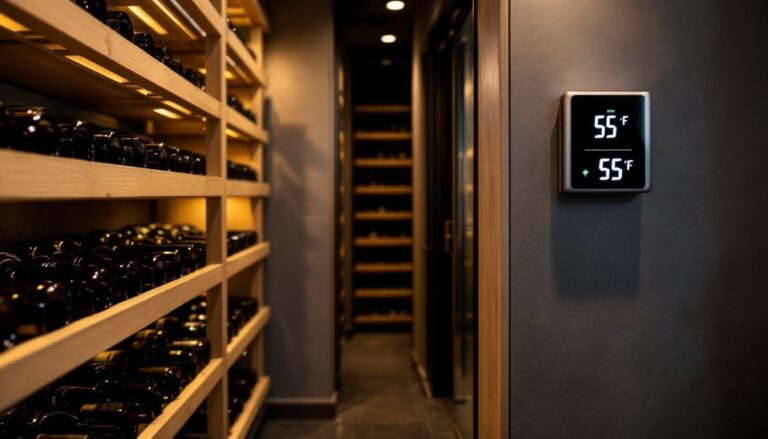
Mount the hygrometer at bottle height, away from the humidifier’s direct output and the cooling unit’s cold air stream. Those spots give false readings. Mid-wall placement, roughly centered in the cellar, reflects true ambient conditions.
Water Quality
Use distilled or reverse-osmosis filtered water in ultrasonic units to prevent mineral buildup. Evaporative models tolerate tap water better, but distilled water reduces scale inside the reservoir and on wicking filters. Replace filters per manufacturer specs, typically every 1–3 months depending on runtime.
Cleaning Schedule
Empty and rinse the reservoir weekly. Once a month, disassemble and scrub all components with a 1:10 white vinegar-to-water solution to dissolve mineral deposits and kill bacteria. Rinse thoroughly before refilling. Neglected humidifiers grow mold and algae, which then gets aerosolized into the cellar.
Seasonal Adjustments
Winter heating and summer air conditioning both strip moisture from indoor air. Expect higher humidifier runtime in these seasons. Conversely, shoulder seasons (spring/fall) in moderate climates may need little to no humidification. Adjust the unit’s output or humidistat set point rather than running it at max year-round.
Safety
Ensure electrical cords don’t cross walking paths or rest in standing water. If running a humidifier on a timer, confirm the unit’s auto-shutoff engages when the reservoir empties to avoid dry-running damage. Steam humidifiers require licensed electrician installation if hard-wired: check local code (often IRC M1411 for appliance installation).
Common Wine Cellar Humidity Problems and Solutions
Humidity Won’t Rise Above 40%
Check for air leaks around doors, light fixtures, or ductwork. Even a well-insulated cellar bleeds moisture if the vapor barrier is compromised. Seal gaps with weatherstripping or expanding foam. If the humidifier is undersized, upgrade to a higher-capacity model or add a second unit on the opposite wall.
Condensation on Walls or Ceiling
This signals RH spiking above 70% or poor air circulation. Reduce humidifier output and verify the cooling system’s fan runs enough to mix air. Persistent condensation can indicate insufficient insulation or a cooling unit struggling to dehumidify during compressor-off cycles. That’s a bigger fix, possibly adding a dedicated dehumidifier on a separate controller.
White Dust on Bottles and Racks
Mineral residue from tap water in an ultrasonic humidifier. Switch to distilled water and wipe down surfaces with a damp microfiber cloth. If deposits have bonded to labels, lightly mist with distilled water and gently dab, don’t rub, which can tear paper.
Mold or Musty Odor
Humidity above 70% for extended periods, stagnant air, or dirty humidifier components. Lower the target RH to 60%, increase air circulation (adjust cooling unit fan settings), and deep-clean the humidifier. Inspect wooden racks for mold: sand and re-seal affected areas with a food-safe finish.
Frequent Refills
Normal in dry climates or poorly sealed cellars. Consider a larger-reservoir model or, for permanent setups, a humidifier with a gravity-fed or float-valve reservoir connected to a water line. Professional install recommended for plumbed units to ensure proper drainage and backflow prevention per plumbing code.
Conclusion
A wine cellar humidifier isn’t optional equipment, it’s the difference between corks that seal and bottles that spoil. Dialing in 55–65% RH takes a correctly sized unit, proper placement, and routine maintenance, but the payoff is a collection that ages as intended. Whether someone opts for a $100 portable evaporative model or integrates humidification into a pro cooling system, the principles stay the same: monitor consistently, clean regularly, and adjust for seasonal swings. Get humidity right, and the cellar does its job quietly for decades.