
A dark green sofa brings depth, sophistication, and a natural elegance to any living room. Unlike neutral beiges or grays, this bold centerpiece anchors a space with color while remaining surprisingly versatile. Whether the goal is a moody, cocooning retreat or a fresh, botanical-inspired room, a dark green sofa adapts to multiple design directions. The key lies in balancing its richness with complementary colors, textures, and thoughtful layout choices. This guide walks through practical strategies for making a dark green sofa the hero of a living room, from selecting the right shade to pairing it with furniture, lighting, and accessories that complete the look.
Key Takeaways
- Dark green sofa options offer timeless sophistication and color staying power, avoiding trend-driven design while hiding wear better than lighter fabrics.
- Choose the right shade by testing swatches in your actual room—emerald works in bright spaces with metallics, forest green suits warm interiors, and hunter green is the most versatile choice.
- Layer complementary colors like neutral whites and creams, earthy tones, jewel tones, or soft blush to balance the sofa’s richness without overwhelming the space.
- Mix textures extensively through velvet upholstery, linen, leather, throw pillows, and patterned rugs to add dimension and prevent a flat appearance.
- Use layered lighting with warm-toned bulbs, floating furniture placement, and mirrors to brighten the room and prevent dark green from making the space feel dim or cave-like.
Why Dark Green Sofas Are the Ultimate Living Room Statement Piece
Dark green occupies a unique spot on the color spectrum. It delivers visual weight without the starkness of black or the heaviness of navy. The color evokes nature, forests, moss, evergreens, which makes it inherently calming yet grounded.
Unlike trend-driven hues that fade in popularity, green has staying power. From emerald to hunter to forest green, these shades have cycled through design eras and consistently return. A quality dark green sofa is an investment piece that won’t feel dated in three years.
Dark green also plays well with both warm and cool palettes. Pair it with brass and terracotta for warmth, or lean into charcoal, blush, and cream for a cooler, contemporary vibe. This flexibility makes it easier to refresh a room’s look over time without replacing the anchor piece.
Finally, a dark green sofa hides wear better than lighter fabrics. Velvet and linen in deep green tones camouflage minor stains and fading, a practical consideration for high-traffic homes or households with pets and kids.
Choosing the Right Shade of Dark Green for Your Sofa
Not all dark greens are equal. The undertones, blue, yellow, or gray, shift how the color reads in different lighting and alongside other materials.
Emerald green leans slightly blue and jewel-toned. It works well in rooms with abundant natural light and pairs cleanly with metallics like gold or brass. Emerald can feel formal, making it a strong choice for traditional or glam-leaning spaces.
Forest green carries warmer, earthier undertones with hints of brown or yellow. This shade feels organic and grounded, ideal for rustic, mid-century, or Scandinavian interiors. It’s forgiving in low-light rooms and complements oak, walnut, and rattan furniture.
Hunter green sits between emerald and forest, with balanced cool and warm notes. It’s the most classic and versatile option, fitting equally well in modern or traditional settings.
Sage-leaning dark greens incorporate gray, giving them a softer, more muted appearance. These work in minimalist or coastal-inspired rooms where a true dark green might feel too bold.
Before committing, test fabric swatches in the actual room at different times of day. Overhead lighting, window placement, and wall color all affect how green reads. A shade that looks sophisticated in the showroom may skew too warm, or too cool, once it’s home.
Color Palettes That Complement a Dark Green Sofa
A dark green sofa thrives when surrounded by intentional color choices. These palettes balance the sofa’s richness without competing for attention.
Neutral foundations are the safest starting point. White, cream, beige, and gray walls let the green take center stage while keeping the room bright and open. Add warmth with tan or oatmeal rugs and curtains, or lean cooler with charcoal accents.
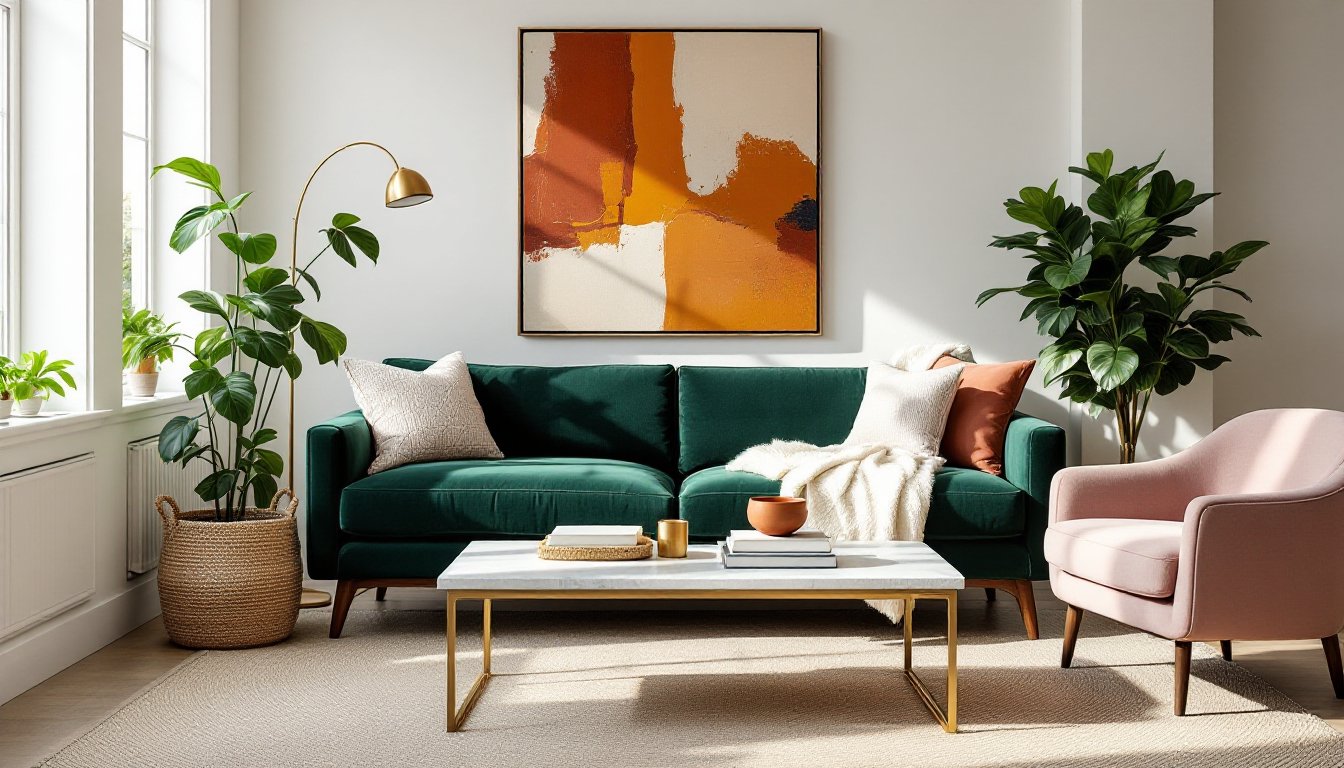
Earthy tones create a cohesive, nature-inspired palette. Pair dark green with terracotta, rust, ochre, or burnt orange in throw pillows, artwork, or pottery. Warm wood tones, especially walnut or teak, reinforce this direction. The result feels grounded and inviting without leaning overly rustic.
Jewel tones amp up drama. Combine dark green with deep navy, plum, burgundy, or sapphire blue. This approach works best in rooms with high ceilings or generous square footage: otherwise, the palette can feel cramped. Balance bold colors with plenty of white or metallic accents.
Blush and pink offer an unexpected but elegant pairing. Soft dusty rose or mauve pillows and throws temper green’s intensity while adding a feminine touch. This combination works especially well in velvet, where the sheen plays up the color contrast.
Monochromatic greens create a layered, sophisticated look. Mix the dark green sofa with sage, olive, or mint accessories. Vary the textures, matte, glossy, woven, to prevent flatness.
Styling Your Dark Green Sofa with Textures and Patterns
Texture is critical when working with a dominant color. A dark green sofa in a single finish can read flat: layering materials adds dimension and visual interest.
Velvet is the most popular upholstery choice for dark green sofas. It catches light beautifully, shifting tone depending on the angle. Velvet also feels luxurious underfoot and holds up well with proper care, vacuum regularly with an upholstery attachment and blot spills immediately.
Linen offers a more casual, lived-in feel. It wrinkles naturally, which some homeowners love and others don’t. Linen breathes well, making it a smart pick for warmer climates. Expect some fading over time, especially in direct sunlight.
Leather in dark green is less common but striking. It skews traditional or masculine and pairs well with brass hardware, dark wood, and Persian rugs. Leather requires conditioning every 6–12 months to prevent cracking.
For throw pillows and blankets, mix textures liberally: chunky knit, faux fur, bouclé, silk, and cotton. Patterns like geometric prints, subtle stripes, or botanical motifs break up solid expanses without overwhelming the room.
Avoid heavy, all-over florals unless the space is large and airy. Instead, opt for line drawings, abstract shapes, or small-scale prints that add interest without competing with the sofa’s boldness.
Rugs anchor the texture story. A jute or sisal rug adds organic warmth: a Persian or vintage Turkish rug injects pattern and history. For modern spaces, consider a high-pile shag in cream or gray to contrast the sofa’s sleekness.
Furniture and Layout Ideas for Dark Green Sofa Living Rooms
The sofa’s placement and surrounding furniture dictate how the room functions and feels.
Floating the sofa away from the wall creates a more conversational, designed layout. This works best in rooms over 12 feet wide. Add a console table behind the sofa for lamps, books, or plants. This setup also improves traffic flow in open-concept spaces.
If the sofa must sit against a wall, break up the flatness with oversized artwork or a gallery wall above it. Keep frames in black, brass, or natural wood to tie into the room’s palette.
For seating, pair the green sofa with accent chairs in complementary colors or textures. A leather club chair adds masculine balance: a velvet slipper chair in blush softens the palette. Avoid matching the sofa exactly, contrast keeps the arrangement dynamic.
Coffee tables in glass, marble, or light wood prevent the room from feeling too heavy. Dark green is a strong color: a bulky dark wood table can make the space feel closed-in. If the aesthetic leans industrial, a metal frame with a glass top works well.
Shelving and storage should be proportional. A low-profile media console in white lacquer or walnut maintains clean lines. Open shelving in brass or black metal keeps the room from feeling cramped while offering display space for plants, ceramics, or books.
For small living rooms, skip the loveseat and add a pair of ottomans or poufs that can be tucked away. This keeps the dark green sofa as the focal point without cluttering the floor plan.
Lighting and Accessories to Enhance Your Dark Green Sofa
Dark green absorbs light, so layered lighting is essential to prevent the room from feeling dim or cave-like.
Ambient lighting provides overall illumination. A ceiling fixture or recessed cans with dimmer switches offer flexibility. Aim for warm white bulbs (2700K–3000K): cool white light can make green look muddy.
Task lighting includes floor lamps beside the sofa for reading and table lamps on side tables. Choose bases in brass, ceramic, or wood to tie into the room’s palette. Linen or cotton shades in white or cream diffuse light gently.
Accent lighting adds drama. Picture lights above artwork, LED strip lighting behind shelving, or a statement pendant over a side table all draw the eye and create visual layers.
Mirrors amplify natural light and make smaller rooms feel larger. Place a large mirror opposite a window or above a console table behind the sofa. Frames in gold, black, or natural wood work depending on the room’s style.
Accessories complete the look but should be curated, not cluttered. Throw blankets in cream, rust, or blush add warmth. Houseplants, especially fiddle leaf figs, snake plants, or pothos, reinforce the organic feel of green and improve air quality.
Artwork should include a mix of scales and mediums. A single large-scale piece makes a bold statement: a gallery wall with varied frames adds personality. Stick to a cohesive color story to avoid visual chaos.
Candles and decorative trays in brass, marble, or wood keep coffee tables tidy while adding texture. Avoid over-accessorizing, three to five curated items per surface is plenty.
Conclusion
A dark green sofa is more than a seating choice, it’s a design anchor that sets the tone for an entire living room. By selecting the right shade, pairing it with complementary colors and textures, and supporting it with thoughtful furniture and lighting, homeowners can create a space that feels both bold and livable. The versatility of dark green ensures it adapts to evolving tastes, making it a smart, stylish investment for years to come.