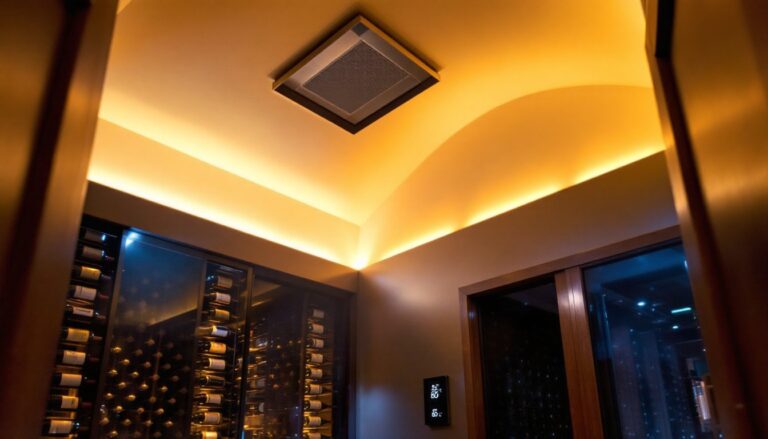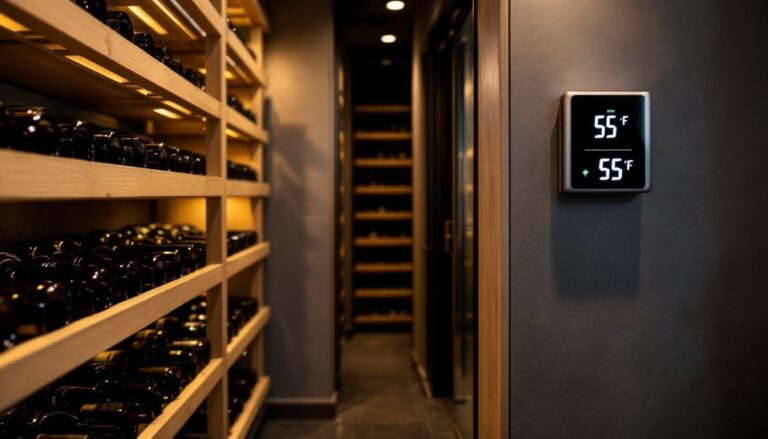
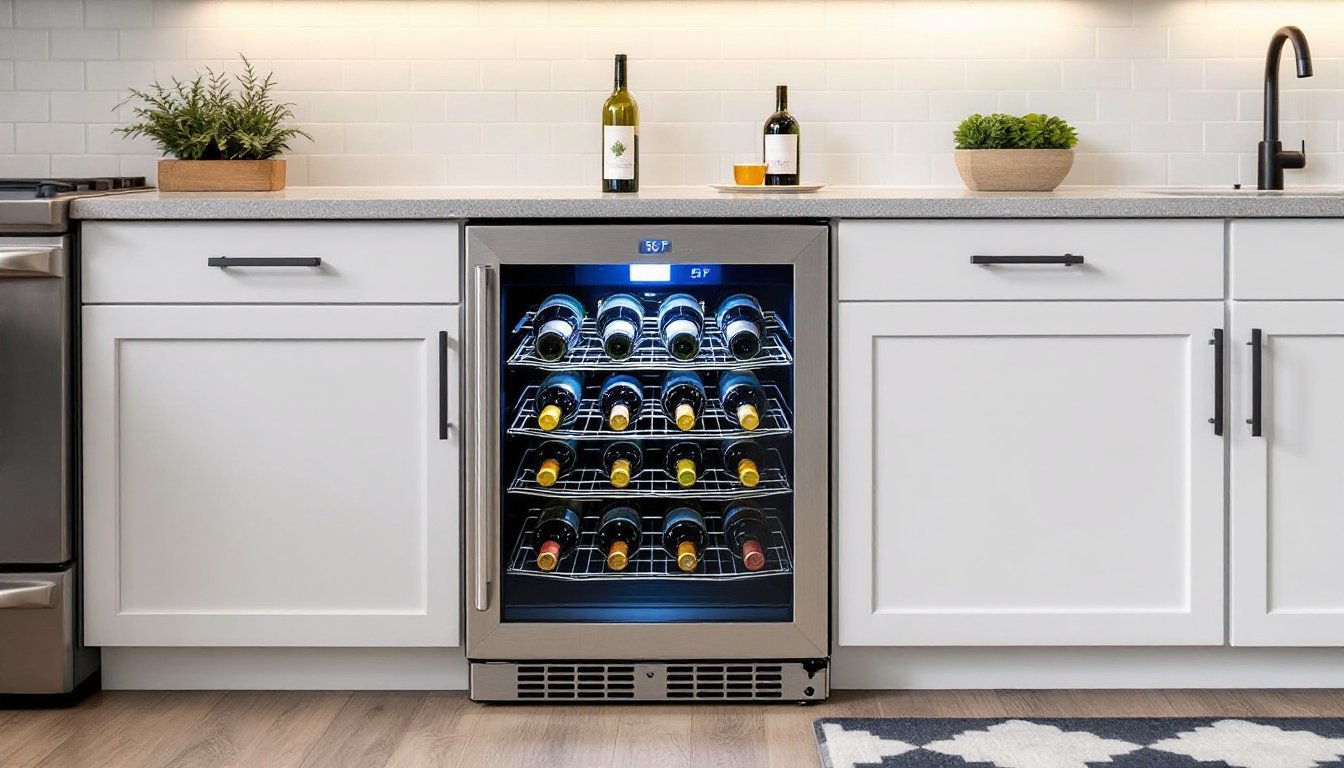

Small wine refrigerators have become a practical solution for homeowners who want proper wine storage without sacrificing precious square footage. Unlike full-size units that demand dedicated floor space, these compact coolers fit under counters, in pantries, or even on kitchen islands. They maintain the consistent temperature and humidity wine needs to age properly, something standard refrigerators can’t do without damaging cork seals and flavor profiles. For anyone working with a condo kitchen, basement bar setup, or even a studio apartment, a small wine refrigerator offers the same storage science as larger models, just scaled down to fit real-world spaces.
Key Takeaways
- Small wine refrigerators fit limited kitchen spaces like under counters and pantries while maintaining proper temperature and humidity for wine aging, unlike standard refrigerators.
- Compact wine coolers typically store 6-24 bottles and cost $150-$500, making them affordable options for casual collectors or renters who need portability without permanent installation.
- Dual-zone models allow separate temperature control for white wines (45-50°F) and red wines (55-65°F), while single-zone units work best for collectors drinking primarily one type.
- Compressor-based cooling systems provide superior temperature precision (±2°F) in variable climates, while thermoelectric models operate more quietly but struggle in warm environments above 75°F.
- Proper placement away from heat sources and adequate ventilation clearance (2-4 inches behind rear-venting units) ensures longevity and prevents premature compressor failure.
- A small wine refrigerator uses 100-200 kWh annually for compressor models versus 300+ kWh for full-size cellars, saving roughly $12-24 per year in electricity costs.
Why Choose a Small Wine Refrigerator?
Space efficiency drives most purchases, but there are other practical reasons to choose a compact wine cooler over a full-size model. Small wine refrigerators typically hold 6 to 24 bottles, making them ideal for casual collectors or those who rotate inventory frequently. They’re also more affordable upfront, most quality units run between $150 and $500, depending on features like dual-zone cooling or UV-protected glass.
Another advantage: energy consumption. Smaller compressor units draw less power than full-size models, often using 100-200 kWh annually compared to 300+ kWh for larger wine cellars. Thermoelectric models (more on those later) use even less, though they sacrifice cooling power in warm environments.
Small wine refrigerators also prevent over-buying. When storage is limited, users tend to curate their collection more carefully, drinking bottles at their peak instead of letting them sit forgotten in a massive cellar. For renters or anyone planning to move within a few years, portability matters, most compact units weigh 40-70 pounds and fit through standard doorways without disassembly.
Finally, these units don’t require dedicated electrical circuits like some commercial-grade wine cellars. A standard 120V outlet handles the load, making installation straightforward. No electrician, no permit, no fuss.
Key Features to Look for in a Compact Wine Cooler
Not all small wine refrigerators are built alike. Understanding the core features helps buyers avoid units that look good on a showroom floor but fail in real-world use.
Capacity and Bottle Configuration
Manufacturers rate capacity based on standard Bordeaux bottles (750ml, roughly 11.5 inches tall and 3 inches in diameter). If the collection includes Champagne, Pinot Noir, or other wider bottles, actual capacity drops, sometimes by 20-30%. Check shelf spacing and whether racks are removable or adjustable. Fixed wire racks work for uniform bottles but frustrate anyone storing mixed formats.
Depth matters, too. Freestanding units typically measure 20-24 inches deep, while built-in or under-counter models run shallower (around 18-20 inches) to align with standard cabinet depth. A unit that protrudes past the counter edge creates a snag point in tight kitchens.
Some compact models use angled shelving to maximize visibility and airflow. This works well for display purposes but reduces per-shelf capacity. Decide whether showcasing labels or cramming in bottles takes priority.
Temperature Zones and Control Precision
Single-zone coolers maintain one temperature throughout, usually adjustable from 40°F to 65°F. These work fine if the user drinks primarily reds or primarily whites, but not both. Dual-zone models split the interior into two independently controlled sections, typically an upper zone for whites (45-50°F) and a lower zone for reds (55-65°F).
Temperature stability matters more than range. Look for units with digital thermostats and compressor-based cooling for tighter control (±2°F variance). Thermoelectric models use a Peltier device instead of a compressor, making them quieter and vibration-free, but they struggle in ambient temperatures above 75°F and typically have wider temperature swings (±5°F).
Avoid units with mechanical dial thermostats unless budget is the sole concern. They lack precision and often require manual recalibration as components age. Digital controls with LED displays let users verify settings at a glance, which matters when troubleshooting cooling issues.
Humidity control is rare in compact units, but some higher-end models include passive humidity trays or vents. Wine corks need 50-70% relative humidity to stay sealed. If the unit runs in a dry basement or garage, consider adding a small humidifier nearby or storing bottles horizontally to keep corks moist from the inside.
Best Placement Options for Small Wine Fridges
Location affects both performance and longevity. Small wine refrigerators are versatile, but they’re not designed for every environment.
Under-counter installation is popular for built-in models with front-venting systems. Standard base cabinets run 24 inches deep and 34.5 inches tall (36 inches with countertop), so units must fit within those constraints while leaving clearance for ventilation. Front-venting units exhaust heat through the kick plate, allowing them to sit flush with cabinetry. Rear-venting models need 2-4 inches of clearance behind them and shouldn’t be enclosed without modification.
Check the manufacturer’s specs for required clearances, typically 2 inches on sides and top for freestanding units. Skimping on ventilation causes compressors to overwork and fail prematurely, often just outside the warranty period.
Freestanding placement in pantries, mudrooms, or basement bars works well if ambient temperature stays between 50°F and 80°F. Garages are risky, summer heat or winter cold forces the cooling system to work harder, shortening its lifespan. If garage placement is unavoidable, insulate the space or choose a model rated for extended temperature ranges.
Avoid placing any wine refrigerator near heat sources: ovens, dishwashers, direct sunlight through windows, or even south-facing walls that radiate heat. Even a few degrees of extra ambient temperature impacts cooling efficiency.
Flooring matters less than stability. Ensure the unit sits level (use a bubble level and adjust feet if present). Unlevel placement stresses door seals and can cause condensation or cooling problems. If installing on vinyl plank or softer flooring, verify the material can support 100-150 pounds concentrated in a small footprint without denting.
For renters, confirm that any built-in installation is reversible and won’t violate lease terms. Most freestanding models leave no trace when removed, but cutting into cabinetry for a built-in unit crosses into permanent modification territory.
Energy Efficiency and Noise Considerations
Energy costs add up over a unit’s 7-10 year lifespan, so efficiency matters. Compressor models typically consume 100-200 kWh annually, translating to roughly $12-24 per year at average U.S. electricity rates (around $0.12/kWh as of 2026). Thermoelectric units use about 30-40% less energy but only in ideal conditions, when ambient temperature rises, they run continuously and lose that advantage.
Look for Energy Star certification if available, though it’s less common on compact wine coolers than on full-size appliances. Check the unit’s wattage rating (usually 50-150W for small models) and compare similar-capacity units. A 100W compressor model running 8 hours daily uses about 292 kWh per year: a 70W thermoelectric model uses 204 kWh under the same usage pattern.
Noise levels range from near-silent (thermoelectric models at ~20-30 dB) to noticeable hum (compressor models at 35-45 dB). For reference, a standard refrigerator runs at 40 dB, a library at 30 dB. If the unit will sit in an open-plan living area or near a bedroom, quieter operation becomes a priority. Compressor noise also includes cycling, the system kicks on and off as temperature fluctuates, creating periodic hum.
Vibration affects wine quality over time, potentially disturbing sediment and accelerating aging. Compressor units vibrate more than thermoelectric models, though many newer designs include rubber mounts or dampening systems to minimize movement. If storing vintage wines for years, prioritize low-vibration models. For everyday drinking wines stored 3-12 months, vibration is negligible.
Some small wine refrigerators include interior LED lighting, which adds ambiance but also draws power and generates minor heat. LEDs are far better than incandescent bulbs (which can raise interior temps), but they still consume 2-5W when on. Motion-activated or timed lighting prevents unnecessary energy use.
Conclusion
Choosing a small wine refrigerator comes down to matching capacity, cooling type, and placement to actual use. Compressor models handle variable climates better and offer tighter temperature control: thermoelectric units win on noise and energy use in stable environments. Measure the installation space carefully, verify ventilation requirements, and don’t assume bottle counts match real-world storage. With proper placement and a realistic understanding of features, a compact wine cooler delivers the same preservation benefits as larger units, without commandeering a closet or requiring a second mortgage.