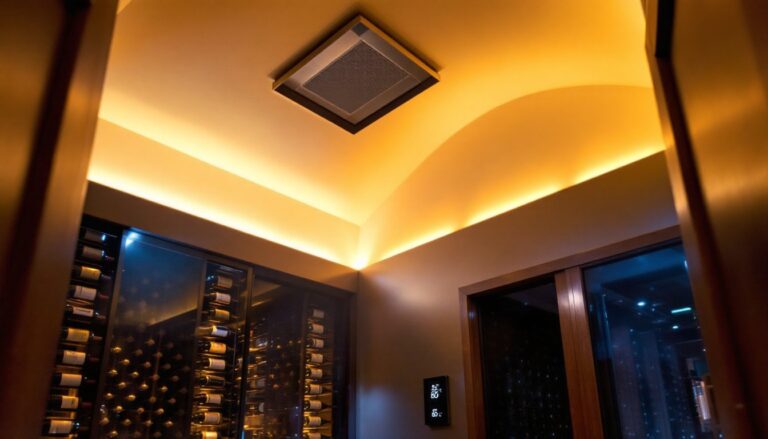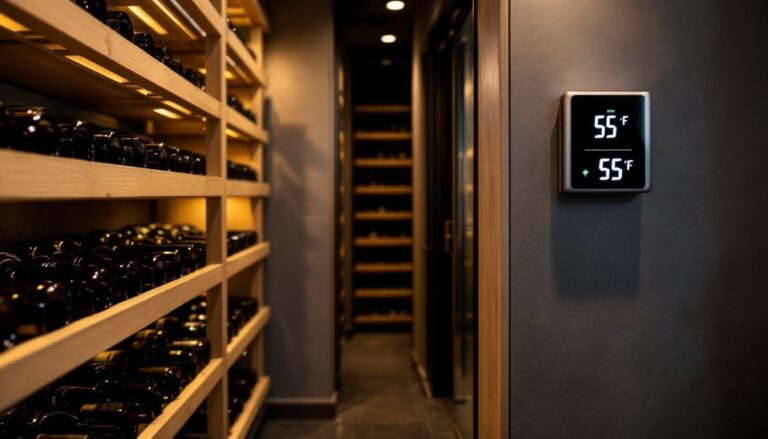
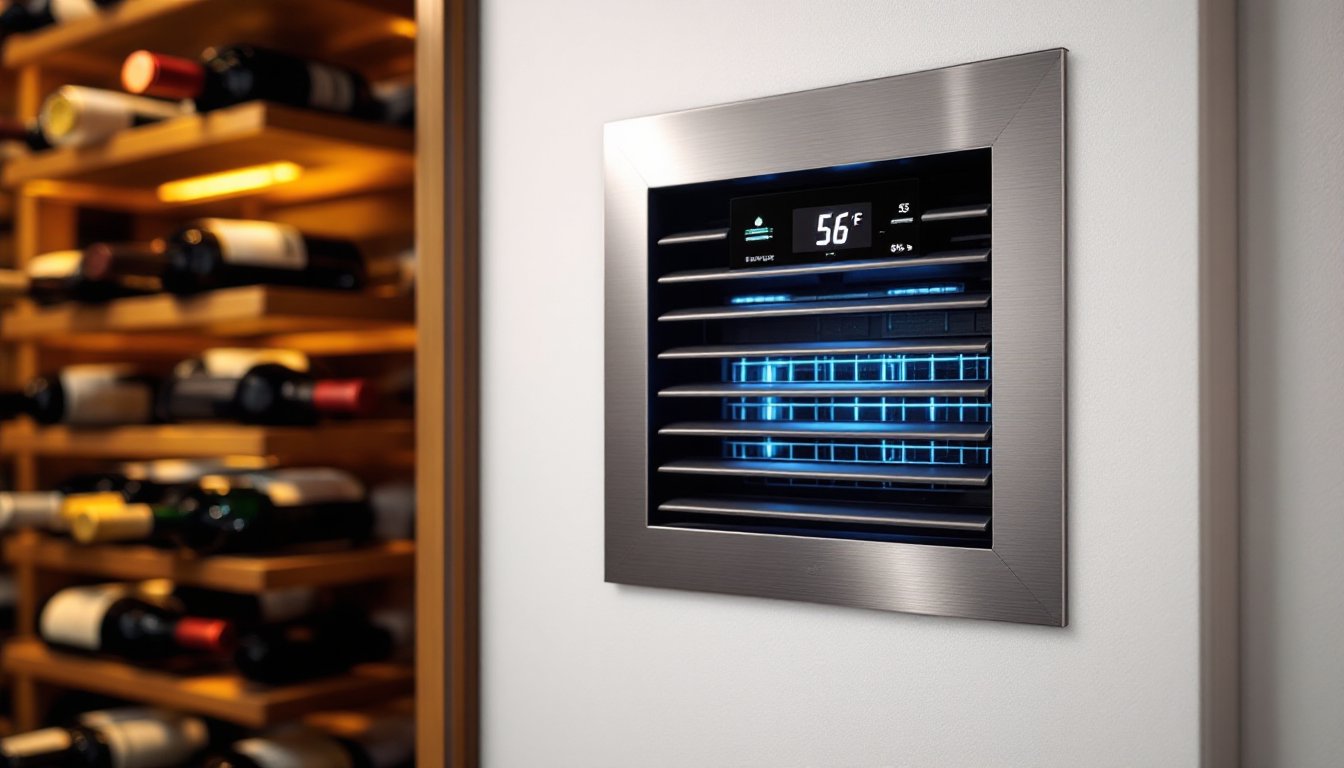

Building a wine cellar without proper refrigeration is like building a garage without a door, technically possible, but missing the whole point. Wine degrades rapidly when exposed to temperature swings, excess humidity, or heat above 70°F. A wine cellar cooling unit maintains the precise climate wine needs: steady temperatures between 55–58°F and 60–70% humidity. Standard HVAC systems cycle on and off, creating temperature swings that age wine prematurely. Dedicated wine cellar refrigeration systems run continuously at lower fan speeds, providing the stable environment serious collectors require. Whether someone’s outfitting a closet conversion or a commercial wine room, choosing the right cooling system determines whether bottles age gracefully or turn to expensive vinegar.
Key Takeaways
- A wine cellar cooling unit maintains precise temperatures between 55–58°F and 60–70% humidity, preventing premature aging far better than standard HVAC systems that allow dangerous 5–8°F temperature swings.
- Self-contained units suit smaller residential cellars up to 1,000 cubic feet, while split systems offer quieter operation and flexibility for larger or finished spaces, though professional installation is required.
- Properly size your wine cellar refrigeration system using the BTU formula: calculate cubic feet × 5–8 BTU per cubic foot, plus additional capacity for exterior walls and heat sources to prevent undersizing or short-cycling.
- Essential installation prerequisites include proper insulation (R-19 walls minimum), vapor barriers, an insulated exterior door, and adequate ventilation space—without these, even the best cooling unit will struggle and fail prematurely.
- Invest in digital thermostats with ±1°F accuracy, automatic defrost cycles, modulating compressors, and remote monitoring to ensure your wine cellar cooling unit protects your collection for 10+ years with stable conditions.
Why Your Wine Collection Needs a Dedicated Cooling Unit
Residential HVAC systems maintain comfort, not precision. They allow temperature swings of 5–8°F between cycles, and most can’t reach the 55–58°F sweet spot wine requires. Worse, central air stops when the house cools down, leaving wine at the mercy of ambient temperature.
Wine cellar cooling units solve three critical problems:
- Temperature stability: They run continuously, adjusting compressor speed rather than cycling completely off. This keeps fluctuations within ±2°F.
- Humidity control: Many wine cellar refrigeration systems include built-in humidifiers or evaporators that maintain 60–70% relative humidity, preventing corks from drying and allowing oxygen infiltration.
- Insulation compatibility: Standard AC can’t overcome poor insulation. Wine cellar equipment is rated by BTU capacity for specific cellar volumes, ensuring adequate cooling even in converted spaces with less-than-ideal thermal barriers.
Without dedicated cooling, a $10,000 Bordeaux collection can develop off flavors within 18 months. The investment in a wine cellar cooling system isn’t optional for anyone serious about long-term storage, it’s infrastructure.
Anyone converting a closet, basement room, or under-stair space into wine storage will need vapor barriers (6-mil polyethylene sheeting), minimum R-19 wall insulation, and an exterior-grade insulated door. Without these, even the best wine cellar refrigeration unit will run constantly and fail prematurely.
Types of Wine Cellar Cooling Systems Explained
Wine cellar refrigeration systems fall into several categories, each with distinct installation needs and performance profiles.
Self-Contained vs. Split Systems
Self-contained (through-the-wall) units mount directly in the cellar wall, venting heat into an adjacent room. They’re the simplest option for residential installs:
- Installation requires a wall penetration roughly 10″ × 18″ (varies by model).
- The unit’s rear exhaust needs at least 500 cubic feet of ventilation space, never into a closet or sealed room.
- Noise levels range from 45–60 decibels, audible if the exhaust side faces living areas.
- Best for cellars up to 1,000 cubic feet: larger spaces need commercial-grade self-contained models.
Split systems separate the evaporator (inside the cellar) from the condenser (outside or in a mechanical room), similar to ductless mini-splits:
- Quieter operation inside the cellar (under 40 decibels).
- Condenser placement is flexible, rooftop, exterior wall, or garage, up to 50 feet of refrigerant line away.
- Requires a licensed HVAC tech for refrigerant line installation and charging: DIY installation voids warranties and may violate EPA regulations.
- Higher upfront cost but better for finished basements or customer-facing commercial wine cellars.
Commercial wine cellar cooling units often use split configurations for cellars exceeding 2,000 cubic feet, with redundant compressors for reliability.
Ducted and Ductless Cooling Options
Ductless wine cellar cooling systems discharge air directly into the cellar through front-mounted vents. They’re standard in self-contained models and simpler split systems. Airflow distribution relies on natural convection, adequate for smaller, well-insulated spaces but less effective in long, narrow cellars or L-shaped layouts.
Ducted wine cellar refrigeration systems connect to short duct runs (typically under 25 feet total), distributing conditioned air through ceiling or floor vents. Benefits include:
- Hidden evaporator units (cleaner aesthetic in high-end builds).
- Better air circulation in irregular cellar shapes.
- Ability to cool multiple small rooms from one unit.
Ducted systems add installation complexity: ductwork must be insulated with R-6 or better to prevent condensation, and static pressure calculations determine maximum duct length. Undersized ducts choke airflow, forcing the compressor to overwork.
How to Calculate the Right Cooling Capacity for Your Cellar
Undersized wine cellar units run nonstop and burn out: oversized units short-cycle, causing temperature swings and humidity issues. Proper sizing starts with calculating cellar volume and heat load.
Basic BTU formula:
- Calculate cellar volume: Length × Width × Height (in feet) = cubic feet.
- Multiply cubic feet by 5–8 BTU per cubic foot, depending on insulation quality and climate.
- Add 1,000 BTU for each exterior wall or window (if present, though windows should be avoided).
- Add 2,000 BTU if the cellar is on an upper floor or adjacent to a heat source (furnace room, kitchen).
Example: A 10′ × 12′ × 8′ cellar = 960 cubic feet. With good insulation (R-19 walls, R-30 ceiling) and one exterior wall:
- 960 cu ft × 6 BTU = 5,760 BTU
- +1,000 BTU (exterior wall) = 6,760 BTU
A wine cellar cooling unit rated for 8,000 BTU provides adequate headroom without excessive oversizing.
Manufacturers publish BTU ratings alongside maximum cubic footage: these assume proper insulation and door seals. Under-insulated cellars need higher capacity or won’t maintain setpoint on hot days.
Commercial wine cellar cooling units often come in modular capacities (12,000, 18,000, 24,000 BTU), allowing installers to match output precisely to large or custom-shaped cellars. For residential conversions, units typically range from 4,000–10,000 BTU.
Installation Requirements and Considerations
Installing a wine cellar refrigeration system isn’t a weekend DIY for most homeowners, electrical, structural, and HVAC work overlap.
Electrical requirements: Most units run on dedicated 115V or 230V circuits. A 230V split system needs a 20-amp breaker and 12-gauge wiring run to the evaporator and condenser. This requires a permit in most jurisdictions and must meet NEC standards. Self-contained units often use 115V but still need a dedicated circuit, never share with other appliances.
Structural considerations:
- Through-wall installs require cutting a hole in a load-bearing or partition wall. If cutting studs, add a header (doubled 2×6 or LVL beam) to carry the load. Consult local building codes: alterations to load-bearing walls may require an engineer’s stamp.
- Ventilation space: The exhaust side of self-contained wine cellar coolers must vent into a room with adequate airflow. Manufacturers specify minimum cubic footage (often 500–1,000 cu ft). Venting into a closet causes the unit to overheat and trip thermal cutoffs.
- Drainage: Some units produce condensate. If there’s no floor drain nearby, a condensate pump (about $60–$120) can route water to a sink or sump.
Split system installs add refrigerant line work. Copper linesets must be evacuated, pressure-tested, and charged with refrigerant, work that requires EPA Section 608 certification. Hiring a licensed HVAC contractor costs $800–$2,000 depending on line length and condenser placement, but ensures warranty coverage and code compliance.
Insulation and vapor barriers: Before installing any wine cellar cooling system, seal the cellar envelope:
- Vapor barrier (6-mil poly) on the warm side of insulation prevents moisture infiltration.
- R-19 minimum in walls, R-30 in ceilings (more if the space above is unconditioned).
- Exterior-grade insulated door with weatherstripping: residential interior doors leak too much air.
Skip these, and the cooling unit will struggle year-round.
Top Features to Look for in a Wine Cooling Unit
Not all wine cellar refrigeration units are created equal. Key differentiators include:
Digital thermostats with ±1°F accuracy: Analog controls allow too much drift. Look for units with digital displays and precise temperature probes.
Humidity control: Higher-end wine cellar air conditioning units include active humidifiers or manage evaporator cycling to maintain 60–70% RH. Cheaper models ignore humidity, requiring add-on humidifiers ($100–$300).
Whisper-quiet operation: Evaporator fans in quality units run under 40 decibels. Cheap compressors and unbalanced fans create vibration and noise, bad for both the homeowner and the wine.
Frost-free evaporators: Units without auto-defrost cycles can ice up in high-humidity climates, choking airflow. Automatic defrost maintains consistent performance.
Modulating compressors: Variable-speed or inverter-driven compressors adjust output rather than cycling on/off, improving efficiency and temperature stability. They cost more upfront but reduce energy use by 20–30%.
Alarms and monitoring: Remote temperature alarms (via Wi-Fi or hardwired contacts) alert owners to failures before wine is damaged. Essential for commercial wine cellar cooling units but worthwhile in any serious collection.
Warranty and service network: A 3–5 year warranty on the compressor and sealed system is standard. Verify that local HVAC contractors service the brand, boutique units with no regional support become expensive paperweights when they fail.
Wine cellar equipment longevity depends on installation quality as much as the unit itself. Even the best wine cellar cooling units fail early if installed in under-insulated spaces or poorly ventilated exhaust areas. Proper prep work, insulation, vapor barriers, and correctly sized electrical circuits, ensures the system performs for a decade or more, protecting the investment in both the cooling unit and the wine itself.